
News & Announcements
Meet KMN-159: Our Most Advanced Internal Drug Candidate
Article from 2023-05-04
Approximately 6.3 million fractures occur in the United States each year.1 While many fractures heal well owing to the tissue regenerative capacity of bone, complications such as delayed union or non-union still arise. The weakened bones in the growing population of older adults are particularly vulnerable due to age-related declines in the ability of the bone to repair itself and comorbidities like osteoporosis and reduced vascular supply, among others. Hence, it is expected that the demand for bone growth and repair promoters will increase for years to come. To address these unmet needs, Cayman is developing a novel drug-delivery matrix combination with the patented EP4 agonist KMN-159 as the active pharmaceutical ingredient (Figure 1).
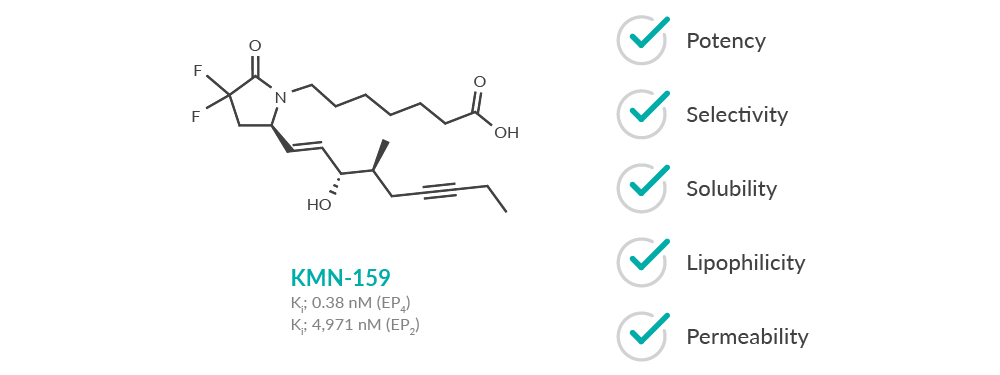
Figure 1. Chemical structure of KMN-159.
EP4 Agonists Stimulate Bone Growth
Prostaglandin E1 (PGE1) or prostaglandin E2 (PGE2) were first demonstrated to be involved in bone metabolism in 1970, and have been known to cause bone formation in humans for more than 40 years.2-4 The clinical observations of bone formation were quickly confirmed in animal models but side effects such as lethargy, hypotension, diarrhea, and flushing precluded advancement of either molecule into the clinic to stimulate bone formation (Figure 2).7 In this same time frame, it was shown that endogenous PGE2 increases locally after fracture, and inhibition of its synthesis with the cyclooxygenase (COX) inhibitor indomethacin impairs bone healing.5,6 Four prostanoid receptor subtypes, EP1-EP4, were identified for PGE2, with the bone formation effects of PGE2 demonstrated to be mediated mainly by EP4, which stimulates the differentiation of stem cells into osteoblasts, the cells that lay down new bone.7-9 These data led to the idea that administration of an EP4 receptor agonist could result in systemic bone formation for the treatment of osteoporosis.
Each EP receptor subtype has a wide pattern of tissue distribution and mediates several biological effects.10 Endogenous prostaglandins work in a paracrine or autocrine manner and have a short half-life, limiting their biological effects to a local area and limiting their duration of action.11 As can be anticipated, systemic administration of EP agonists induces a slew of side effects. EP4 is no exception, as agonist administration results not only in bone formation but also in hypotension.7 Given this undesired systemic effect, as well as the need to stimulate new bone formation for site-specific clinical uses such as spinal fusion surgery, repair of non-union fracture, or joint fusion, agonism of EP4 receptors with a highly potent and receptor-selective compound, administered in a way that confines its release to the desired site of bone formation, could effectively meet these clinical needs.
Figure 2. PGE2 stimulates bone formation via EP4 receptor agonism but systemic side effects limit its therapeutic utility.
Past endeavors by others have experienced the problems with systemically administering EP agonists firsthand. EP2 and EP4 agonists were pursued by large pharma programs for years as one strategy to promote bone growth in order to prevent and/or treat osteoporosis. However, all of these programs were terminated preclinically because of untoward side effects. Current bone anabolic therapies for local application are based on recombinant human bone morphogenic proteins (rhBMPs) formulated in a collagen matrix.12 The use of the collagen matrix permits local administration, facilitating its controlled release. However, BMPs are very expensive, and a wide range of safety concerns have been raised about these proteins, limiting their clinical utility.
KMN-159: A New Drug for an Old Target
Cayman scientists have devised a novel approach that packages our proprietary EP4 agonist in a drug-delivery matrix combination to promote bone healing.
KMN-159 is the most advanced drug candidate from Cayman's internal drug discovery program. It is a potent, stable, and a highly selective EP4 receptor agonist that stimulates osteogenic activity in various in vitro and in vivo orthopedic models.13-17 KMN-159 possesses key drug-like properties, a favorable safety profile, and can be formulated with drug delivery matrices (Figure 3). This drug-matrix combination makes KMN-159 suitable for local administration, a strategy that controls its release and avoids side effects caused by systemic administration.
Figure 3. Illustration of the KMN-159 drug-matrix combination. KMN-159 diffuses from a collagen matrix after local application to a fracture. Only nearby osteogenic activity is stimulated. There is minimal systemic drug exposure.
Functional Chemistry of KMN-159
KMN-159 is a PGE structural mimetic (Figure 4). A lactam ring system has been used as a replacement for the hydroxycyclopentanone ring in PGE analogs for years because it lends the molecule EP4 receptor selectivity.10 PGE2 notoriously and readily dehydrates to its corresponding cyclopentenone degradant, PGA2. KMN-159 design renders this degradation pathway not possible by avoiding incorporation of the corresponding hydroxyl group in the ring and by incorporating two fluorine atoms adjacent to the lactam ring carbonyl group, affording this more durable, chemically stable mimetic. These two modifications address the problems inherent in endogenous PGEs, those being non-selectivity and chemical instability, respectively.
Figure 4. A structural comparison of the hydroxycyclopentanone ring system in the endogenous EP4 agonist PGE2 compared with the lactam ring system in KMN-159.
A variety of side chains can be substituted on the lactam ring, providing the opportunity to synthesize a large number of analogs that can be characterized in structure-activity relationship (SAR) studies. Some companies have harnessed these side chains to introduce fluorine to the molecule, a popular strategy for boosting the potency of small molecule drugs.13,18 Because of its small size and strong electronegative properties, fluorine substitution can be used to tailor how a compound behaves physiologically by altering its shape, conformation, and flexibility.18
Our chemists invented a four-step, one-pot protocol for incorporation of the two fluorine substituents on the lactam ring. We formulated, designed, synthesized, and characterized over 300 novel EP4 agonists with variable degrees of selectivity, potency, and drug-like properties using this method. From SAR studies using biological testing and receptor modeling, KMN-159 emerged as the lead candidate.9,13 KMN-159 induces local bone formation and will be delivered as a drug-matrix combination, avoiding the systemic side effects that are inherent with PGE2.14
Related Literature:
|
KMN-159 Enters Translational Studies in Equine Models
One of the core goals of basic biomedical research is to translate findings from animal models into human therapies. While small animal models like mice and rats are commonly used, certain large animal models may be a more realistic approximation to some human conditions (Figure 5).19
Horses are a well-accepted large animal model for human musculoskeletal conditions, from which a greater understanding can be gleaned that benefits both human and veterinary medicine.20 Their size alone permits study of orthopedic defects that more accurately model the scale observed in humans and support in-depth studies.15,19 Their anatomy is generally comparable, and they develop many of the same orthopedic problems as humans, like osteoarthritis, with a similar etiology.19-21
Figure 5. A comparison (not drawn to scale) of human and horse limb anatomy.
Like human medicine, there is a critical need for orthopedic therapeutics that promote bone regeneration in equine veterinary medicine. Stress and overuse-related orthopedic injuries are common in both equine athletes as well as companion horses.19-21 The pastern joint, which is analogous to a human's ankle or wrist, frequently develops arthritis, leading to lameness (a lack of weight-bearing on the affected limb).21 Healing fractures in horses is much more difficult than in humans. When horses break a leg, the injury is often catastrophic. Metal plates and screws can surgically fuse joints and stabilize fractures, but a common complication seen in these operations is support limb laminitis.22
It is critical that lame horses resume weight-bearing on all four limbs as soon as possible to prevent this painful condition, which results when lameness in one limb (such as that caused by a fracture) leads to swelling, inflammation, and loss of blood flow to the hoof in the healthy limb.22,23 Treatment options are limited, and development of laminitis often leads to euthanasia of the horse. Bone-promoting therapies, like KMN-159, that could accelerate bone healing would help get these horses back on all four legs sooner, preventing the occurrence of this devastating condition.
Cayman is collaborating with Dr. Laurie Goodrich, an equine orthopedic surgeon at Colorado State University (CSU), professor in the College of Veterinary Medicine and Biomedical Sciences, and Director of the Orthopaedic Research Center at CSU's C. Wayne McIlwraith Translational Medicine Institute. Dr. Goodrich will first perform a small pilot study in a splint bone defect model, an established model for evaluating equine bone healing that is minimally invasive and with few potential complications.24 She will remove a small portion of bone from the splint bones to create a non-union fracture defect to investigate if KMN-159 promotes bone healing in the horse.
"I am very excited to perform the horse splint bone pilot study that we have planned. As an equine orthopedic surgeon, I see many cases in which the availability of a novel bone healing agent such as KMN-159 could lead to greatly improved outcomes for my patients," said Dr. Goodrich.
Future Directions
She continued, "Once we show that KMN-159 can stimulate bone formation in our horse splint bone, my goal is to quickly move on to showing it can be used to facilitate pastern joint fusion, the clinical problem with the greatest need. From there, you can imagine a lot of other uses for this agent in clinical situations where stimulation of bone formation in a specific location is needed."
These equine surgeries will set the stage for further therapies in veterinary medicine for companion and working animals as well as translational therapies in humans, spanning from repair of non-union fractures and long bone defects, joint replacements, osteoporosis, dental implants, spinal fusion, and craniofacial repair.
You May Also Be Interested In
 Integrated Drug Discovery Services |  Cayman’s Intellectual Property Programs |
 Tools to Study Eicosanoid GPCR Signaling |  Eicosanoid Enzymology and Metabolism |
References
1. Meinberg, E.G., Clark, D., Miclau, K.R., et al. Fracture repair in the elderly: Clinical and experimental considerations. Injury50 (Suppl 1), S62-S65 (2019).
2. Klein, D.C., and Raisz, L.G. Prostaglandins: Stimulation of bone resorption in tissue culture. Endocrinology 86(1):1436-1440 (1970).
3. Ueda, K., Saito, Ak., Nakano, H., et al. Cortical hyperostosis following long-term administration of prostaglandin E1 in infants with cyanotic congenital heart disease. J. Pediatr. 97(5):834-836 (1980).
4. Jørgensen, H.R., Svanholm, H., and Høst, A. Bone formation induced in an infant by systemic prostaglandin-E2 administration. Acta Orthop. Scand. 59(4):464-466 (1988).
5. Dekel, S., Lenthall, G., and Francis, M.J. Release of prostaglandins from bone and muscle after tibial fracture. An experimental study in rabbits. J. Bone Joint Surg. Br. 63-B(2), 185-189 (1981).
6. Keller, J., Bünger, C., Andreassen, T.T., et al. Bone repair inhibited by indomethacin. Effects on bone metabolism and strength of rabbit osteotomies. Acta Orthop. Scand. 58(4), 379-383 (1987).
7. Li, M., Thompson, D.D., and Paralkar, V.M. Prostaglandin E2 receptors in bone formation. Int. Orthop. 31(6), 767-772 (2007).
8. Yoshida, K., Oida, H., Kobayashi, T., et al. Stimulation of bone formation and prevention of bone loss by prostaglandin E EP4 receptor activation. Proc. Natl. Acad. Sci. USA 99(7), 4580-4585 (2002).
9. Machwate, M., Harada, S., Leu, C.T., et al. Prostaglandin receptor EP4 mediates the bone anabolic effects of PGE2. Mol. Pharmacol. 60(1), 36-41 (2001).
10. Markovič, T., Jakopin, Ž., Dolenc, M.S., et al. Structural features of subtype-selective EP receptor modulators. Drug Discov. Today 22(1), 57-71 (2017).
11. Legler, D.F., Bruckner, M., Uetz-von Allmen, E., et al. Prostaglandin E2 at new glance: Novel insights in functional diversity offer therapeutic chances. Int. J. Biochem. Cell Biol. 42(2), 198-201 (2010).
12. El Bialy, I., Jiskoot, W., and Reza Nejadnik, M. Formulation, delivery and stability of bone morphogenetic proteins for effective bone regeneration. Pharm. Res. 34(6), 1152-1170 (2017).
13. Barrett, S.D., Holt, M.C., Kramer, J.B., et al. Difluoromethylene at the γ-lactam α-position improves 11-deoxy-8-aza-PGE1 series EP4 receptor binding and activity: 11-Deoxy-10,10-difluoro-8-aza-PGE1 analog (KMN-159) as a potent EP4 agonist. J. Med. Chem. 62(9), 4731-4741 (2019).
14. Owen, T.A., Patel, C., Wei, S., et al. KMN-159, a novel EP4 receptor selective agonist, stimulates osteoblastic differentiation in cultured whole rat bone marrow. Gene 748, 144668 (2020).
15. Rzeczycki, P., Owen, T., Jin, Q., et al. KMN-159 induces osteogenesis in novel 3D model of osseointegration. Poster presented at: Academy of Osseointegration Annual Meeting; March 16-18, 2023; Phoenix, AZ.
16. Owen, T.A., Patel, C., Cahill, A., et al. Release of the EP4 receptor agonist KMN-159 from scaffolds in vitro. Poster presented at: ORS 2020 Annual Meeting; February 8-11, 2020; Phoenix, AZ.
17. Patel, C., Wei, S., Owen, T., et al. KMN-159, a novel EP4 receptor agonist, stimulates osteoblastic differentiation of human bone marrow-derived mesenchymal stem cells. Poster presented at: Bones and Teeth Gordon Research Conference; February 2-7, 2020; Galveston, TX.
18. Shah, P. and Westwell, A.D. The role of fluorine in medicinal chemistry. J. Enzyme Inhib. Med. Chem. 22(5), 527-540 (2007).
19. Ribitsch, I., Baptista, P.M., Lange-Consiglio, A., et al. Large animal models in regenerative medicine and tissue engineering: To do or not to do. Front. Bioeng. Biotechnol. 8, 972 (2020).
20. Fortier, L.A., Goodrich, L.R., Ribitsch, I., et al. One health in regenerative medicine: Report on the second Havemeyer symposium on regenerative medicine in horses. Regen. Med. 15(6), 1775-1787 (2020).
21. Estrada McDermott, J., Pezzanite, L., Goodrich, L., et al. Role of innate immunity in initiation and progression of osteoarthritis, with emphasis on horses. Animals (Basel) 11(11), 3247 (2021).
22. Virgin, J.E., Goodrich, L.R., Baxter, G.M., et al. Incidence of support limb laminitis in horses treated with half limb, full limb or transfixation pin casts: A retrospective study of 113 horses (2000-2009). Equine Vet. J. Suppl. 40, 7-11 (2011).
23. Ribitsch, I., Oreff, G.L., and Jenner, F. Regenerative medicine for equine musculoskeletal diseases. Animals(Basel) 11(1), 234 (2021).
24. Grzeskowiak, R.M., Alghazali, K.M., Hecht, S., et al. Influence of a novel scaffold composed of polyurethane, hydroxyapatite, and decellularized bone particles on the healing of fourth metacarpal defects in mares. Vet. Surg. 50(5), 1117-1127 (2021).
Contact Info
Cayman Chemical1180 East Ellsworth RoadAnn Arbor, Michigan 48108 USAToll Free: (800) 364-9897(USA and Canada only)Fax: (734) 971-3640


