
News & Announcements
The Science Behind GLP-1, GIP, and Glucagon Receptor Agonists for Obesity Research
Article from 2024-06-17
Obesity is the second leading cause of preventable death in the United States.1 It is associated with multiple comorbidities, including type 2 diabetes (T2D), metabolic dysfunction-associated liver disease (MASLD, formerly known as non-alcoholic fatty liver disease (NAFLD)), cardiovascular disease, and cancer.2
Originally developed to treat T2D, glucagon-like peptide 1 (GLP-1), glucose-dependent insulinotropic polypeptide (GIP), and glucagon receptor agonists have found new therapeutic utility for obesity.
Cayman offers these agents for research use only to support research in metabolic diseases like T2D and obesity. This article explores the science behind these agents.
Insulin and Glucagon Regulate Glucose Homeostasis
The regulation of blood glucose levels is driven largely by hormones released from the pancreas: insulin and glucagon.3 These two hormones have opposing actions and work together to regulate glucose homeostasis.
Insulin is released when blood glucose levels are high (hyperglycemia) and reduces blood glucose levels by signaling to cells to absorb glucose from the bloodstream for energy or storage, thus reducing blood glucose levels. Glucagon is released when blood glucose levels are low (hypoglycemia). It stimulates the liver to increase glucose production through glycogenolysis, thereby raising blood glucose levels.
Figure 1. Summary of insulin and glucagon pathways in glucose homeostasis.
The Incretins GLP-1 and GIP Regulate Blood Glucose Levels by Stimulating Insulin Release After Food Consumption
Blood glucose levels typically rise after eating and fall when fasting. After food consumption, glucose, a critical source of energy for cells that is necessary to perform countless biological processes, is released into the blood stream, increasing blood glucose levels.4
To stimulate the post-prandial secretion of insulin, the body utilizes two incretin hormones produced in the intestine: glucagon-like peptide 1 (GLP-1) and glucose-dependent insulinotropic polypeptide (GIP).5 These hormones are released after food consumption and stimulate the secretion of insulin from the pancreas, which signals cells to absorb glucose for energy or storage, decreasing post-prandial increases in blood glucose levels.
GLP-1 Regulates Appetite and Food Intake
In addition to stimulating insulin production, GLP-1, but not GIP, also slows gastric emptying, decreases gut motility, reduces food intake and appetite, and stimulates glucagon-dependent energy expenditure through complex central and peripheral pathways.6-9 Collectively, these effects help promote weight reduction, making GLP-1 receptor (GLP-1R) agonists a valuable approach for obesity.
View all peptide hormones related to food intake available from Cayman
Figure 2. Summary of the actions of GLP-1 and GIP in glucose homeostasis and weight reduction.
Incretin-Based Therapies for Obesity Research
Single Agonists
Semaglutide, a GLP-1R agonist, is a peptide analog of GLP-1 used to promote weight reduction. It has been shown to help individuals with obesity achieve greater weight loss when used as an adjunct to lifestyle changes like reduced caloric intake and increased physical activity when compared to lifestyle changes alone.10
Other peptide-based GLP-1R agonists like lixisenatide, liraglutide, dulaglutide, and exenatide are available that differ in their molecular structure, size, pharmacology, efficacy, and safety that offer various advantages, depending on the individual.11
Non-peptide therapies may offer advantages over peptide-based therapies. Peptide-based therapies are typically large molecular weight compounds, necessitating injection, whereas non-peptide-based GLP-1R agonists, like orforglipron, or positive allosteric modulators, like V-0219, could be administered as oral formulations.12-14 These non-peptide GLP-1R agonists are in clinical trials.
View all GLP-1R agonists available from Cayman
GLP-1 Receptor (human) Reporter Assay KitFor the high-throughput screening of therapeutic compounds regulating GLP-1R activation.
| 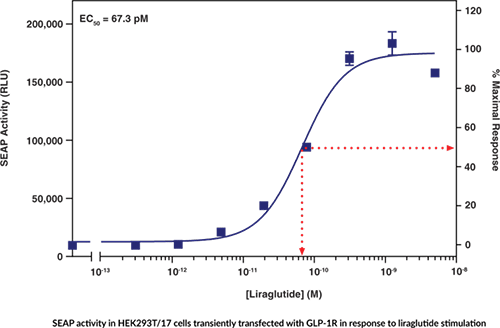 |
Dual Agonists
Tirzepatide is a first-in-class dual GLP-1R and GIPR agonist.15 While GIP alone does not appear to delay gastric emptying or alter food intake and appetite, for reasons that are unclear, GLP-1 and GIP receptor (GIPR) agonists synergize, providing greater benefits when compared to GLP-1R agonists alone.6,8,9,16 These dual GLP-1R and GIPR agonists, colloquially known as "twincretins", appear to also reduce side effects because of their dual mechanisms of action.16 The advantages seen with these dual agonists have sparked further investigations into identifying therapies that target multiple mechanisms of action.
View all dual GLP-1R and GIPR agonists available from Cayman
Triple Agonists
One such novel approach is by targeting three hormone receptors.
Glucagon receptor (GCGR) antagonists were originally pursued as therapies for T2D based on the idea that they would blunt glucose production and encourage insulin secretion.16 However, these drug development efforts fell out of favor over safety concerns attributable to the development of hepatic steatosis, a predisposing condition for the development of MASLD.
However, despite their hyperglycemic effects, GCGR agonists promote satiety and increase energy expenditure by stimulating thermogenesis, making them a potentially valuable complement in studying obesity.17 The hyperglycemic effect of GCGR agonism can be offset by including agents that stimulate insulin secretion and hence, lower blood glucose levels, making polyagonist formulations with GLP-1R and/or GIPR agonists a novel therapeutic approach for obesity. Indeed, retatrutide, a triple GLP-1R, GIPR, and GCGR agonist, has shown promise in clinical trials.18
View all triple GLP-1R, GIPR, and GCGR agonists available from Cayman
| | GLP-1R Agonists | GIPR Agonists | GCGR Agonists |
| Semaglutide A peptide analog | | | |
| Lixisenatide A peptide analog | | ||
| Dulaglutide A peptide analog | |||
| Exendin A peptide analog | |||
| Orforglipron A non-peptide agonist | |||
| V-0219 A non-peptide positive allosteric modulator | | ||
| LSN3318839 A non-peptide positive allosteric modulator | |||
| Taspoglutide (acetate) A peptide analog | |||
| Liraglutide A peptide analog | | ||
| Tirzepatide A peptide analog | | | |
| Bamadutide A peptide analog | |||
| Cotadutide (acetate) A peptide analog | |||
| Survodutide A peptide analog | |||
| Mazdutide A peptide analog | |||
| Retatrutide A peptide analog | | | |
| SAR441255 (sodium salt) A peptide analog | |||
| These products are for scientific research use only. | |||
Future Directions
What's more, many of these repurposed T2D therapies are not only being explored in obesity, but in other conditions associated with obesity, including heart failure and cardiovascular disease.19-22 Several of these same agents also show potential benefits in treating other conditions, such as substance use disorders and neurodegenerative conditions such as Alzheimer's disease and Parkinson's disease.23-26
Available from Cayman
Cayman has products and resources to support diabetes and/or obesity research.
View all research tools for diabetes
View all research tools for obesity
References
1. Wang, Y., Beydoun, M.A., Min, J., et al. Has the prevalence of overweight, obesity and central obesity levelled off in the United States? Trends, patterns, disparities, and future projections for the obesity epidemic. Int. J. Epidemiol. 49(3), 810-823 (2020).
2. Zhang, X., Ha, S., Lau, H. C.-H., et al. Excess body weight: Novel insights into its roles in obesity comorbidities. Semin. Cancer Biol. 92, 16-27 (2023).
3. Röder, P.V., Wu, B., Liu, Y., et al. Pancreatic regulation of glucose homeostasis. Exp. Mol. Med. 48(3), e219 (2016).
4. Nakrani, M.N., Wineland, R.H., and Anjum, F. Physiology, glucose metabolism. In: StatPearls [Internet]. Treasure Island (FL): StatPearls Publishing (2024). Available from: https://www.ncbi.nlm.nih.gov/books/NBK560599/
5. Baggio, L.L. and Drucker, D.J. Biology of incretins: GLP-1 and GIP. Gastroenterology 132(6), 2131-2157 (2007).
6. Nauck, M.A., Quast, D.R., Wefers, J. et al. The evolving story of incretins (GIP and GLP-1) in metabolic and cardiovascular disease: A pathophysiological update. Diabetes Obes. Metab. 23(Suppl 3), 5-29 (2021).
7. González-García, I., Milbank, E., Diéguez, C., et al. Glucagon, GLP-1 and thermogenesis. Int. J. Mol. Sci. 20(14), 3445 (2019).
8. Holst, J.J. and Rosenkilde, M.M. GIP as a therapeutic target in diabetes and obesity: Insight from incretin co-agonists. J. Clin. Endocrinol. Metab. 105(8), e2710-e2716 (2020).
9. Edholm, T., Degerblad, M., Grybӓck, P. et al. Differential incretin effects of GIP and GLP-1 on gastric emptying, appetite, and insulin-glucose homeostasis. Neurogastroenterol. Motil. 22(11), 1191-1200, e315 (2010).
10. Wadden, T.A., Chao, A.M., Moore, M., et al. The role of lifestyle modification with second-generation anti-obesity medications: Comparisons, questions, and clinical opportunities. Curr. Obes. Rep. 12(4), 453-473 (2023).
11. Almandoz, J.P., Lingvay, I., Morales, J., et al. Switching between glucagon-like peptide-1 receptor agonists: Rationale and practical guidance. Clin. Diabetes 38(4), 390-402 (2020).
12. Malik, F. and Li, Z. Non‐peptide agonists and positive allosteric modulators of glucagon‐like peptide‐1 receptors: Alternative approaches for treatment of type 2 diabetes. Br. J. Pharmacol. 179(4), 511-525 (2022).
13. Wharton, S., Blevins, T., Connery, L., et al. Daily oral GLP-1 receptor agonist orforglipron for adults with obesity. N. Engl. J. Med. 389(10), 877-888 (2023).
14. Decara, J.M., Vázquez-Villa, H., Brea, J., et al. Discovery of V-0219: A small-molecule positive allosteric modulator of the glucagon-like peptide-1 receptor toward oral treatment for "diabesity"'. J. Med. Chem. 65(7), 5449-5461 (2022).
15. Lin, F., Yu, B., Ling, B., et al. Weight loss efficiency and safety of tirzepatide: A systematic review. PLoS One 18(5), e0285197 (2023).
16. Hope, D.C.D., Vincent, M.L., and Tan, T.M.M. Striking the balance: GLP-1/glucagon co-agonism as a treatment strategy for obesity. Front. Endocrinol.(Lausanne) 12, 735019 (2021).
17. Novikoff, A. and Müller, T.D. The molecular pharmacology of glucagon agonists in diabetes and obesity. Peptides 165, 171003 (2023).
18. Naeem, M., Imran, L., and Banatwala, U.E.S.S. Unleashing the power of retatrutide: A possible triumph over obesity and overweight: A correspondence. Health Sci. Rep. 7(2), e1864 (2024).
19. Kosiborod, M.N, Abildstrøm, S.Z., Borlaug, B.A., et al. Semaglutide in patients with heart failure with preserved ejection fraction and obesity. N. Engl. J. Med. 389(12), 1069-1084 (2023).
20. Husain, M., Bain, S.C., Jeppesen, O.K., et al. Semaglutide (SUSTAIN and PIONEER) reduces cardiovascular events in type 2 diabetes across varying cardiovascular risk. Diabetes Obes. Metab. 22(3), 442-451 (2020).
21. Ryan, D.H., Lingvay, I., Colhoun, H.M., et al. Semaglutide effects on cardiovascular outcomes in people with overweight or obesity (SELECT) rationale and design. Am. Heart J. 229, 61-69 (2020).
22. Edwards, K.L. and Minze, M.G. Dulaglutide: An evidence-based review of its potential in the treatment of type 2 diabetes. Core Evid. 10, 11-21 (2015).
23. Thomsen, M., Holst, J.J., Molander, A., et al. Effects of glucagon-like peptide 1 analogs on alcohol intake in alcohol-preferring vervet monkeys. Psychopharmacology(Berl.) 236(2), 603-611 (2019).
24. Yammine, L., Green, C.E., Kosten, T.R., et al. Exenatide adjunct to nicotine patch facilitates smoking cessation and may reduce post-cessation weight gain: A pilot randomized controlled trial. Nicotine Tob. Res. 23(10), 1682-1690 (2021).
25. Leggio, L., Hendershot, C.S., Farokhnia, M., et al. GLP-1 receptor agonists are promising but unproven treatments for alcohol and substance use disorders. Nat. Med. 29(12), 2993-2995 (2023).
26. Mahapatra, M.K., Karuppasamy, M., and Sahoo, B.M. Therapeutic potential of semaglutide, a newer GLP-1 receptor agonist, in abating obesity, non-alcoholic steatohepatitis and neurodegenerative diseases: A narrative review. Pharm. Res. 39(6), 1233-1248 (2022).
Contact Info
Cayman Chemical1180 East Ellsworth RoadAnn Arbor, Michigan 48108 USAToll Free: (800) 364-9897(USA and Canada only)Fax: (734) 971-3640


