
Technical Support & Resources
Information provided in the product description is from published literature. Due to the nature of scientific experimentation, your results (e.g., selectivity and effective concentrations) or specific application for this product may differ. If you have questions about how this product fits your application, please contact our technical support staff.
Visit our FAQ
Contact Us
Toll Free Phone (USA and Canada Only): (888) 526-5351
Direct Phone: (734) 975-3888
Product Categories
Technical Information
- Anchovyxanthin
- Xanthophyll 3
- Zeaxanthol
Shipping & Storage Information
Recommended Products
Certificates of Analysis & Batch Specific Data
Provide batch numbers separated by commas to download or request available product inserts, QC sheets, certificates of analysis, data packs, and GC-MS data.
Lipid Resource Center
Discover Products & Resources for Lipid Research
- High-purity lipid standards
- Lipid roles in biology
- Lipids in health & disease
- Lipids for pharmaceutical development
- Protocols, advice, & resources
Product Description
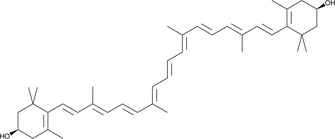
Zeaxanthin is a dietary carotenoid that has been found in orange and yellow fruits and has diverse biological activities.1,2,3,4,5 In vivo, zeaxanthin (50 mg/kg) decreases immobility time in the forced swim test and reduces hippocampal levels of IL-6, IL-1β, and TNF-α in a rat model of diabetes induced by streptozotocin (STZ; Item No. 13104).1 It also reduces albuminuria, serum levels of urea nitrogen and malondialdehyde (MDA), and kidney damage in a rat model of STZ-induced diabetic nephropathy.2 It forms the macular pigment in human eyes, and high dietary intake of zeaxanthin is positively correlated with reduced risk of advanced neovascular age-related macular degeneration in humans.3,4,5
WARNING This product is not for human or veterinary use.
References & Product Citations
1. Zeaxanthin improved diabetes-
2. The hypoglycemic, hypolipidemic, and anti-
3. The pharmacological effects of lutein and zeaxanthin on visual disorders and cognition diseases. Molecules 22(4), 610 (2017).
4. The relationship of dietary carotenoid and vitamin A, E, and C intake with age related macular degeneration in a case-
5. Possible role for dietary lutein and zeaxanthin in visual development. Nutr. Rev. 66(12), 695-702 (2008).
Contact Info
Cayman Chemical1180 East Ellsworth RoadAnn Arbor, Michigan 48108 USAToll Free: (800) 364-9897(USA and Canada only)Fax: (734) 971-3640


