
Technical Support & Resources
Visit our FAQ
Contact Us
Toll Free Phone (USA and Canada Only): (888) 526-5351
Direct Phone: (734) 975-3888
Technical Information
- Cyclooxygenase 1
- PGHS-1
- Prostaglandin Endoperoxide Synthase 1
- Prostaglandin G/H Synthase 1
- Prostaglandin H2 Synthase 1
Shipping & Storage Information
Recommended Products
Certificates of Analysis & Batch Specific Data
Provide batch numbers separated by commas to download or request available product inserts, QC sheets, certificates of analysis, data packs, and GC-MS data.
Lipid Resource Center
Discover Products & Resources for Lipid Research
- High-purity lipid standards
- Lipid roles in biology
- Lipids in health & disease
- Lipids for pharmaceutical development
- Protocols, advice, & resources
Product Description
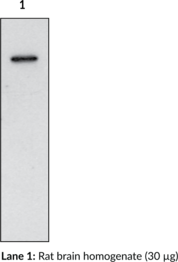
Cyclooxygenase 1 (COX-1) is a bifunctional enzyme that exhibits both COX and peroxidase activities.1,2 It is composed of an N-terminal signal peptide, an EGF-like domain, a membrane binding domain, a catalytic domain, and a C-terminal tail.3 COX-1 is constitutively expressed in the gastrointestinal tract, kidney, spleen, liver, and lung and localizes to the endoplasmic reticulum.4,5 The COX component converts arachidonic acid (Item Nos. 90010 | 90010.1 | 10006607) to a hydroperoxyl endoperoxide prostaglandin G2 (PGG2; Item No. 17010) and the peroxidase component reduces the endoperoxide to the corresponding alcohol PGH2 (Item No. 17020), the precursor of PGs, thromboxanes, and prostacyclins.1,2 COX-1 is the target of many non-steroidal anti-inflammatory drugs (NSAIDs) and is responsible for the undesirable gastrointestinal and renal side effects, such as ulcer formation and reductions in the glomerular filtration rate, respectively.6,7 Cayman’s COX-1 (mouse) Polyclonal Antibody can be used for Western blot (WB).
WARNING This product is not for human or veterinary use.
References & Product Citations
1. Isolation and properties of intermediates in prostaglandin biosynthesis. Biochim. Biophys. Acta 326(3), 448-461 (1973).
2. Detection and isolation of an endoperoxide intermediate in prostaglandin biosynthesis. Proc. Natl. Acad. Sci. USA 70(3), 899-903 (1973).
3. Prostaglandin endoperoxide H synthases-
4. Pharmacological and biochemical demonstration of the role of cyclooxygenase 2 in inflammation and pain. Proc. Natl. Acad. Sci. USA 91(25), 12013-12017 (1994).
5. Different intracellular locations for prostaglandin endoperoxide H synthase-
6. Expression and selective inhibition of the constitutive and inducible forms of human cyclo-
7. A classification of NSAIDs according to the relative inhibition of cyclooxygenase isoenzymes. Trends Pharmacol. Sci. 18(1), 30-34 (1997).
Alteration of vascular responsiveness to uridine adenosine tetraphosphate in aortas Isolated from male diabetic otsuka long-
Cyclooxygenase isoform exchange blocks brain-
Loss of PPARcexpression in mammary secretory epithelial cellscreates a pro-
Effects of rhizophora mangle on experimental colitis induced by TNBS in rats. Evid Based Complement. Med. 2012, 753971 (2012).
Protection of protease-
Expression and cellular localization of cyclooxygenases and prostaglandin E synthases in the hemorrhagic brain. J. Neuroinflammation 8, 22 (2011).
Pulmonary oxidative stress is increased in cyclooxygenase-
Immunohistochemical localization of microsomal PGE synthase-
Effects of sophoraflavanone G, a prenylated flavonoid from Sophora flavescens, on cyclooxygenase-
Contact Info
Cayman Chemical1180 East Ellsworth RoadAnn Arbor, Michigan 48108 USAToll Free: (800) 364-9897(USA and Canada only)Fax: (734) 971-3640


