
Technical Support & Resources
Visit our FAQ
Contact Us
Toll Free Phone (USA and Canada Only): (888) 526-5351
Direct Phone: (734) 975-3888
Product Categories
Product Type
Research Area
Application
Technical Information
- Epidermal Growth Factor
- URG
- β-Urogastrone
Shipping & Storage Information
Recommended Products
Certificates of Analysis & Batch Specific Data
Provide batch numbers separated by commas to download or request available product inserts, QC sheets, certificates of analysis, data packs, and GC-MS data.
Kinase Resource Center
Discover Products & Resources for Kinase Research
- Kinase inhibitors, screening libraries, assay kits, & more
- Tools to study kinase signaling pathways:
- Growth factor signaling
- PI3K/Akt/mTOR
- MAPKs (ERK, p38, & JNK)
- JAK/STAT signaling
- Articles, resources, & advice
Product Description
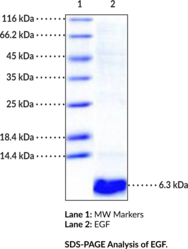
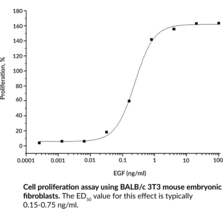
Epidermal growth factor (EGF) is a polypeptide ligand for the EGF receptor (EGFR; Item No. 32026).1,2 It is synthesized as a 1,217 amino acid glycosylated transmembrane precursor protein from which mature, soluble EGF is formed by proteolysis. Mature EGF is a 53-amino acid polypeptide that contains six cysteine residues, which form three intramolecular disulfide bonds essential to the biological activity of EGF. EGF is synthesized in the brain, kidney, pancreas, small intestine, pituitary gland, and submaxillary gland and is found in various bodily fluids, including saliva, cerebrospinal fluid, blood, breast milk, and prostatic fluid.2 Binding of EGF to the EGFR induces receptor dimerization, autophosphorylation, and intracellular signaling with roles in cell proliferation. In patients with early Parkinson’s disease and Alzheimer’s disease with amnestic mild cognitive impairment, low plasma EGF levels are predictive of future long-term cognitive decline.3 Plasma levels of EGF are reduced in pregnant woman infected with T. cruzi compared with uninfected pregnant controls.4 Exogenous application of EGF normalizes cortical GABAergic transmission and improves rotarod performance in the R6/2 transgenic mouse model of Huntington's disease.5 Probiotic administration of E. coli engineered to secrete human EGF induces epithelial barrier restoration in a mouse model of intestinal ulcers.6 Immunization with human EGF induces an anti-EGF antibody response and increased survival in mice with EGFR-expressing tumors.7 Cayman's EGF (human, recombinant) protein can be used for cell-based assay applications. This protein consists of 54 amino acids and has a calculated molecular mass of 6.3 kDa.
WARNING This product is not for human or veterinary use.
References & Product Citations
1. .
2. .
3. .
4. .
5. .
6. .
7. .
Contact Info
Cayman Chemical1180 East Ellsworth RoadAnn Arbor, Michigan 48108 USAToll Free: (800) 364-9897(USA and Canada only)Fax: (734) 971-3640


