
Technical Support & Resources
Visit our FAQ
Contact Us
Toll Free Phone (USA and Canada Only): (888) 526-5351
Direct Phone: (734) 975-3888
Product Categories

Technical Information
- Monomethylated Histone H4 Arginine 3
Shipping & Storage Information
Recommended Products
Certificates of Analysis & Batch Specific Data
Provide batch numbers separated by commas to download or request available product inserts, QC sheets, certificates of analysis, data packs, and GC-MS data.

Explore Obesity & Metabolic Disease Resources
Discover high-quality research tools to investigate GLP-1 mechanisms and next-generation metabolic targets.
OBESITY RESEARCH SOLUTIONSProduct Description
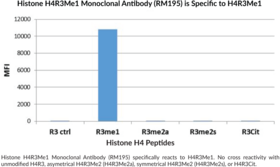
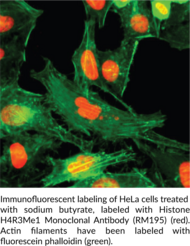
Histone H4 is one of four core histone proteins that are involved in the organization of DNA into chromatin.1 Histones are globular proteins with unstructured N-terminal tails and are subject to a variety of post-translational modifications, such as methylation, acetylation, phosphorylation, and citrullination, that can influence chromatin structure and regulate gene transcription.1,2 Histone H4 can be monomethylated at arginine 3 (H4R3Me1) by protein arginine methyltransferase 1 (PRMT1), PRMT5, and PRMT6.3 Retinal levels of H4R3Me1 are reduced in a rat model of diabetes induced by streptozotocin (STZ; Item No. 13104) compared with non-diabetic controls.4 Cayman's Histone H4R3Me1 Monoclonal Antibody (RM195) can be used for ELISA, immunocytochemistry (ICC), multiplex-based assay, and Western blot (WB) applications.
WARNING This product is not for human or veterinary use.
References & Product Citations
1. Histone hypercitrullination mediates chromatin decondensation and neutrophil extracellular trap formation. J. Cell Biol. 184(2), 205-213 (2009).
2. Writing, erasing and reading histone lysine methylations. Exp. Mol. Med. 49(4), e324 (2017).
3. The role of histone methylation and methyltransferases in gene regulation. Toxicoepigenetics Core Principles and Applications 31-84 (2018).
4. Abnormal levels of histone methylation in the retinas of diabetic rats are reversed by minocycline treatment. Sci. Rep. 7, 45103 (2017).
Contact Info
Cayman Chemical1180 East Ellsworth RoadAnn Arbor, Michigan 48108 USAToll Free: (800) 364-9897(USA and Canada only)Fax: (734) 971-3640


