
Technical Support & Resources
Visit our FAQ
Contact Us
Toll Free Phone (USA and Canada Only): (888) 526-5351
Direct Phone: (734) 975-3888
Product Categories
Technical Information
- ACC1
- ACCα
Shipping & Storage Information
Recommended Products
Certificates of Analysis & Batch Specific Data
Provide batch numbers separated by commas to download or request available product inserts, QC sheets, certificates of analysis, data packs, and GC-MS data.
Lipid Resource Center
Discover Products & Resources for Lipid Research
- High-purity lipid standards
- Lipid roles in biology
- Lipids in health & disease
- Lipids for pharmaceutical development
- Protocols, advice, & resources
Product Description
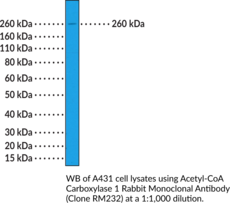
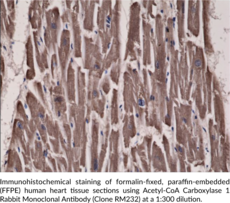
Acetyl-CoA carboxylase 1 (ACC1) is a biotin-dependent enzyme that catalyzes the conversion of acetyl-CoA (Item No. 16160) to malonyl-CoA (Item No. 16455), a building block in the biosynthesis of long-chain fatty acids.1,2,3 It is found at high levels in the liver and adipose tissue and is localized to the cytosol.3 Expression of ACC1 is increased by sterol regulatory element binding protein-1a (SREBP-1a) and SREBP-1c, which are induced by insulin, as well as the lipid precursors inositol and choline (Item No. 31178).1 ACC1 activity is increased by citrate and inhibited by binding to long-chain acyl-CoAs or by phosphorylation by a number of kinases, including AMPK and TAK1.1,3,4 ACC1 has critical roles in fatty acid synthesis and regulation of insulin levels.3 It is involved in numerous pathological conditions, including metabolic diseases such as diabetes and non-alcoholic fatty liver disease (NAFLD), as well as cancer and bacterial infections.2 Cayman's Acetyl-CoA Carboxylase 1 Rabbit Monoclonal Antibody (Clone RM232) can be used for immunohistochemistry (IHC) and Western blot (WB) applications.
WARNING This product is not for human or veterinary use.
References & Product Citations
1. Acetyl-
2. Recent development in acetyl-
3. Acetyl-
4. Acetyl-
Contact Info
Cayman Chemical1180 East Ellsworth RoadAnn Arbor, Michigan 48108 USAToll Free: (800) 364-9897(USA and Canada only)Fax: (734) 971-3640


