
Technical Support & Resources
Visit our FAQ
Contact Us
Toll Free Phone (USA and Canada Only): (888) 526-5351
Direct Phone: (734) 975-3888
Product Categories
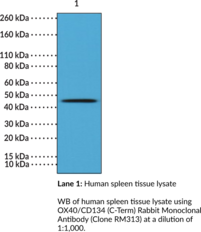
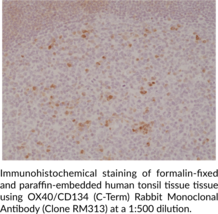
Technical Information
Shipping & Storage Information
Recommended Products
Certificates of Analysis & Batch Specific Data
Provide batch numbers separated by commas to download or request available product inserts, QC sheets, certificates of analysis, data packs, and GC-MS data.
Kinase Resource Center
Discover Products & Resources for Kinase Research
- Kinase inhibitors, screening libraries, assay kits, & more
- Tools to study kinase signaling pathways:
- Growth factor signaling
- PI3K/Akt/mTOR
- MAPKs (ERK, p38, & JNK)
- JAK/STAT signaling
- Articles, resources, & advice
Product Description
OX40, also known as TNF receptor superfamily member 4 (TNFRSF4), is a type I transmembrane glycoprotein and the cognate receptor for the T cell co-stimulatory molecule OX40L (TNFSF4; Item No. 32065).1 OX40 assembles into trimers, with each monomer containing three cysteine-rich domains (CRDs) that bind OX40L and a cytoplasmic tail that interacts with TNF receptor-associated factor 1 (TRAF1), -2, -3, and -5 to induce a variety of intracellular signaling cascades, including NF-κB, ERK, PI3K, and Akt pathways.2,1 OX40 is transiently expressed on CD4+ and CD8+ T cells in response to antigen stimulation in humans and is localized to lipid rafts.3,1 Binding of an OX40 trimer to trimeric OX40L, expressed by antigen-presenting cells (APCs), including dendritic cells (DCs), macrophages, and B cells, forms a hexameric OX40-OX40L complex that promotes effector T cell phenotype and function, proliferation, survival, and memory.3 Increased OX40 levels have been found in inflamed tissues isolated from patients with a variety of autoimmune diseases, including multiple sclerosis, systemic lupus erythematosus (SLE), or rheumatoid arthritis.3 Cayman's OX40 (C-Term) Rabbit Monoclonal Antibody (Clone RM313) can be used for immunohistochemistry (IHC) and Western blot (WB) applications.
WARNING This product is not for human or veterinary use.
References & Product Citations
1. The immunobiology of CD27 and OX40 and their potential as targets for cancer immunotherapy. Blood 131(1), 39-48 (2018).
2. The significance of OX40 and OX40L to T-
3. OX40, OX40L and autoimmunity: A comprehensive review. Clin. Rev. Allergy Immunol. 50(3), 312-332 (2016).
Contact Info
Cayman Chemical1180 East Ellsworth RoadAnn Arbor, Michigan 48108 USAToll Free: (800) 364-9897(USA and Canada only)Fax: (734) 971-3640


