
Technical Support & Resources
Information provided in the product description is from published literature. Due to the nature of scientific experimentation, your results (e.g., selectivity and effective concentrations) or specific application for this product may differ. If you have questions about how this product fits your application, please contact our technical support staff.
Visit our FAQ
Contact Us
Toll Free Phone (USA and Canada Only): (888) 526-5351
Direct Phone: (734) 975-3888
Product Categories
Research Area

Technical Information
- 1,2-Distearoyl-sn-glycero-3-PE-Polyethylene Glycol-2000-Biotin
- 1,2-Distearoyl-sn-glycero-3-Phosphoethanolamine-Polyethylene Glycol-2000-Biotin
- DSPE-PEG2000-Biotin
- 1,2-DSPE-PEG(2000)-Biotin
Shipping & Storage Information
Recommended Products
Certificates of Analysis & Batch Specific Data
Provide batch numbers separated by commas to download or request available product inserts, QC sheets, certificates of analysis, data packs, and GC-MS data.
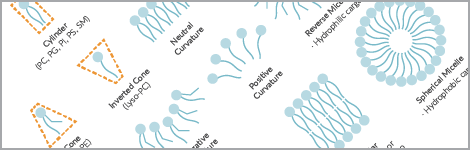
Learn More About Leveraging Helper Lipids to Achieve Versatile LNPs
READ THE ARTICLEProduct Description
DSPE-PEG(2000)-biotin is a PEGylated and biotinylated form of 1,2-distearoyl-sn-glycero-3-PE (Item No. 15095).1,2 It has been used in the generation of liposomes for the delivery of small molecules in vitro and in vivo and for fluorescently labeling nanostructured lipid carriers (NLCs). DSPE-PEG(2000)-biotin has also been used in the formation of micelles as a precursor to immobilized liposomes for biolayer interferometry binding assays.3 Liposomes containing DSPE-PEG(2000)-biotin and encapsulating doxorubicin (Item No. 15007) and quercetin (Item No. 10005169) are cytotoxic to MCF-7/adr multidrug-resistant breast cancer cells in vitro and reduce tumor growth in an MCF-7/adr mouse xenograft model.1 NLCs containing DSPE-PEG(2000)-biotin have been fluorescently labeled using avidin-conjugated FITC.2
WARNING This product is not for human or veterinary use.
References & Product Citations
1. Co-
2. Tumor specific delivery and therapy by double-
3. An approach for liposome immobilization using sterically stabilized micelles (SSMs) as a precursor for bio-
Contact Info
Cayman Chemical1180 East Ellsworth RoadAnn Arbor, Michigan 48108 USAToll Free: (800) 364-9897(USA and Canada only)Fax: (734) 971-3640


