
Technical Support & Resources
Visit our FAQ
Contact Us
Toll Free Phone (USA and Canada Only): (888) 526-5351
Direct Phone: (734) 975-3888
Product Categories
Technical Information
- p42 MAPK
- MAPK1
Shipping & Storage Information
Recommended Products
Certificates of Analysis & Batch Specific Data
Provide batch numbers separated by commas to download or request available product inserts, QC sheets, certificates of analysis, data packs, and GC-MS data.
Kinase Resource Center
Discover Products & Resources for Kinase Research
- Kinase inhibitors, screening libraries, assay kits, & more
- Tools to study kinase signaling pathways:
- Growth factor signaling
- PI3K/Akt/mTOR
- MAPKs (ERK, p38, & JNK)
- JAK/STAT signaling
- Articles, resources, & advice
Product Description
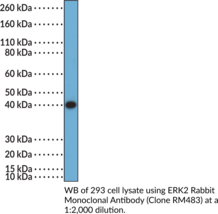
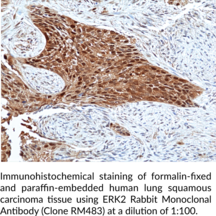
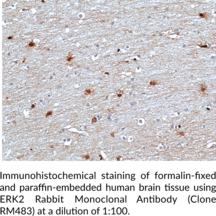
ERK2 is a serine/threonine protein kinase and an essential component of the MAP kinase signaling cascade.1 It is composed of a glycine-rich loop, hinge region, and protein kinase domain containing a catalytic HRD motif, activation segment, and kinase insert domain. ERK2 is ubiquitously expressed with higher levels in the brain and hematopoietic cells.2,3 It localizes to the cytosol anchored to MEK1/2.1 Upon extracellular stimulation with mitogens, growth factors, or cytokines, the MAP kinase signaling cascade is initiated and terminates with phosphorylation of ERK2 in the activation segment's activation lip at Tyr204 or Tyr187 by MEK1/2.4,5,1,6 Upon activation, ERK2 phosphorylates and activates substrates in the cytosol or various subcellular compartments, including the nucleus, where they induce activation of transcription factors involved in cell proliferation, differentiation, and the stress response.7,8,4,5 Misregulation of the MAP kinase cascade drives the development of various cancers.4,5 Cayman's ERK2 Rabbit Monoclonal Antibody (Clone RM483) can be used for immunohistochemistry (IHC) and Western blot (WB) applications.
WARNING This product is not for human or veterinary use.
References & Product Citations
1. ERK1/2 MAP kinases: Structure, function, and regulation. Pharm. Res. 66(2), 105-143 (2012).
2. ERK1 and ERK2 map kinases: Specific roles or functional redundancy? Front. Cell Dev. Biol. 4, 53 (2016).
3. ERK1 and ERK2 mitogen-
4. Targeting the mitogen-
5. ERK/MAPK signalling pathway and tumorigenesis. Exp. Ther. Med. 19(3), 1997-2007 (2020).
6. ERK1 and ERK2. Encyclopedia of signaling molecules (2018).
7. Growth factor-
8. Nuclear translocation of p42/p44 mitogen-
Contact Info
Cayman Chemical1180 East Ellsworth RoadAnn Arbor, Michigan 48108 USAToll Free: (800) 364-9897(USA and Canada only)Fax: (734) 971-3640


