Meet the Expert: Immunopeptidome Profiling
Meet Cayman’s Director of Immunology & Cell Biology, Julie Rumble, Ph.D., and learn about the work she is doing to identify novel peptide sequences in tumor tissues.
Read More
As a trusted contract research organization, Cayman offers a full suite of services supported by our in-house expertise and strategic partnerships with industry leaders. Our immunopeptidome profiling services provide efficient, cost-effective deep sequence analysis of MHC-associated peptides for the identification of neoantigens and potential immunogenic sequences. We’ve partnered with leading industry experts to provide a complete package for clients’ neoantigen discovery needs from isolation and sequencing of MHC-associated peptides to peptide synthesis and production.
The adaptive immune system is equipped to recognize and react to specific threats and holds a memory of previous attacks. Learn how our Immunopeptidome Profiling Services can help you harness this machinery to fight cancer, viral infections, and autoimmune diseases.
MHC-specific antibodies are utilized to immunoaffinity purify MHC class I and MHC class II complexes from human tumor tissue, cell lines, and primary cells. Gentle elution conditions collect the MHC-associated peptides, which are then subjected to LC-MS/MS analysis for identification and matched to known sequences. Automation of protein and peptide sample preparation using Agilent’s AssayMAP Bravo Platform enables increased capacity and reduces variability. Up to 96 samples can be processed in a single run, using less antibody and fewer cells to yield high-quality results. MS Bioworks is Cayman’s partner in protein mass spectrometry.
Quality control points in our immunoprecipitation workflow help to provide the highest quality data to our clients. We have developed ELISAs to evaluate the solubilization of the MHC complex in lysates as well as the depletion of that complex after the immunoaffinity isolation step. These quality control points allow us to develop efficient, flexible workflows for a variety of client-led objectives, from identifying neoantigens in tumor cells to probing individual HLA alleles’ presentation patterns and pinpointing immunogenic epitopes of biologic drugs.
Genetic mutations in cancer cells can give rise to novel peptide sequences (neoantigens) that can be presented via the MHC-I pathway and potentially recognized by the immune system as foreign. Profiling the immunopeptidome of established tumor cell lines or tumor tissue holds potential for the development of personalized antitumor immunotherapies designed to stimulate a patient’s immune response to neoantigen-derived epitopes.
MHC class II associated peptide proteomics (MAPPs) is of growing importance as a drug development tool for biological therapeutics, as repeated administration can lead to immune-mediated neutralization and reduced long-term efficacy of recombinant protein and engineered antibody-based drugs. Cayman has optimized methods to enhance uptake of biologics by APCs, which combined with specific MHC-II immunoprecipitation, results in improved efficiency in identifying potentially immunogenic epitopes in allele-specific patient subsets.
Our Neoantigen Discovery Services combine Cayman’s expertise in immunopeptidome profiling with GenScript’s expertise in peptide synthesis to provide you with the complete package for neoantigen candidate discovery and development.
GenScript’s Neoantigen Discovery Services include reliable peptide synthesis for functional screening of neoantigen candidates for personalized cancer vaccine and T cell therapies, personalized cancer vaccine animal testing, and clinical stage vaccine immunogenicity testing. Every peptide request is evaluated using NeoPre™; a bioinformatics algorithm to determine synthetic difficulty and the appropriate synthesis platform (i.e., microwave, liquid-phase, solid-phase). Each peptide undergoes total quality management testing to generate a thorough validation report. Additional library design tools (i.e., alanine scanning, overlapping, Tcell truncation) are available to assist with optimizing peptide sequences.
Meet Cayman’s Director of Immunology & Cell Biology, Julie Rumble, Ph.D., and learn about the work she is doing to identify novel peptide sequences in tumor tissues.
Read More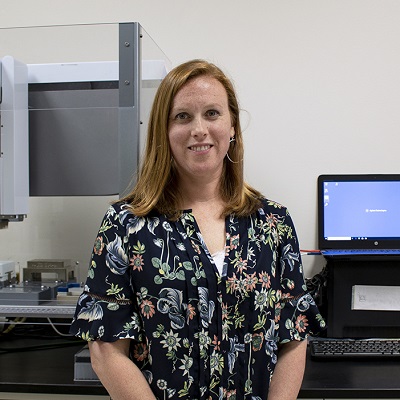
An optimized workflow for the sensitive and specific analysis of MHC-I peptides, using HCT116 as a case study, is presented.
Download App Note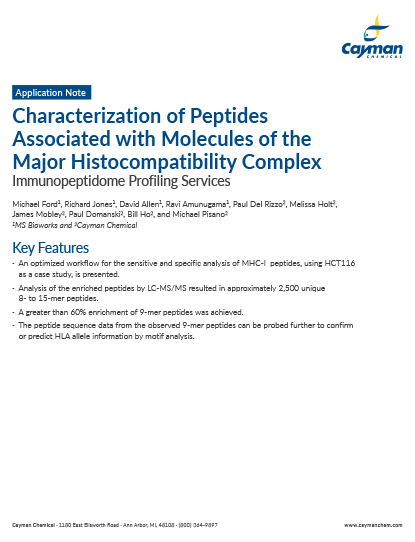
LNPs encoding SARS-CoV-2 Spike protein were formulated with several different lipids...
View Poster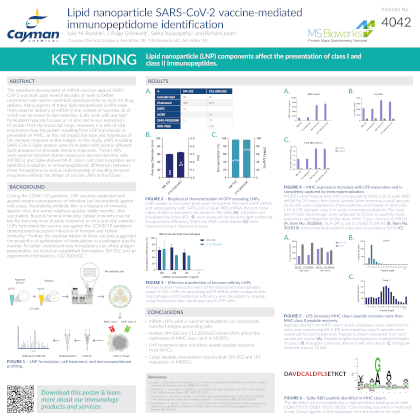
Biotinylation of HLA-DR in live cells can be utilized to enrich MHC class II for immunopeptidomic studies.
View Poster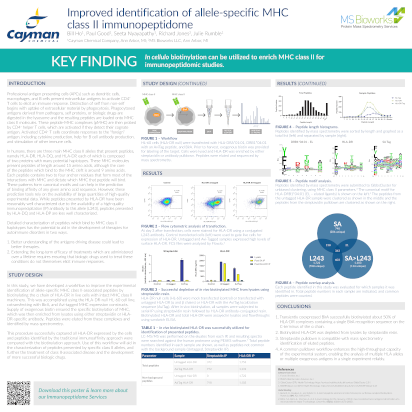
Depletion of mouse MHC complexes prior to IP shows minimal contribution of mouse MHC-associated…
View Poster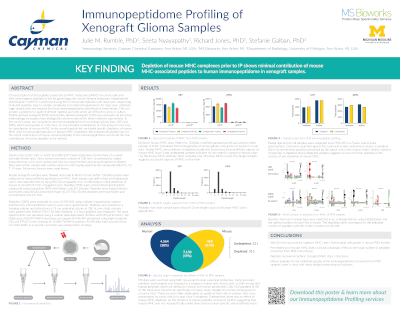
We show that immune responses elicited to neoantigens can be identified through immunopeptidome profiling.
View Poster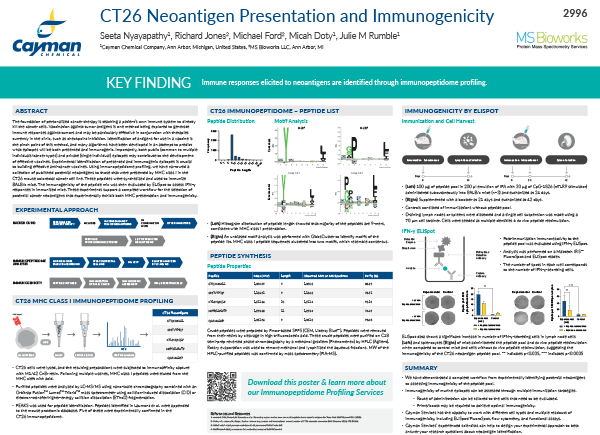
Learn about key considerations for planning your immunopeptidome profiling experiment...
WatchLearn how neoantigen epitopes can be identified and how peptides can be used...
WatchContact Info
Cayman Chemical1180 East Ellsworth RoadAnn Arbor, Michigan 48108 USA

