
News & Announcements
Evaluating Respiratory Depressant Effects of Fentanyl Opioids
Article from 2021-12-06
Cayman's Forensic Division chemists synthesize reference standards and collaborate with Virginia Commonwealth and Johns Hopkins University researchers to study how fentanyl analogs impact respiratory depression (a leading cause of overdose deaths).
Fatalities from potent fentanyl analogs continue to be a major health concern. This study evaluated the respiratory depressant effects of seven fentanyl analogs that have either emerged in the illicit drug supply or been identified in toxicological analyses following fatal or non-fatal intoxications. Adult male Swiss Webster mice were administered fentanyl analogs (isobutyryl fentanyl, crotonyl fentanyl, para-methoxyfentanyl, para-methoxy-butyryl fentanyl, furanyl fentanyl 3-furancarboxamide isomer, thiophene fentanyl, and benzodioxole fentanyl) and their effects on minute volume as compared to µ-opioid receptor (MOR) agonist standards (fentanyl, morphine, and buprenorphine) were measured using whole body plethysmography (WBP). The results of this study demonstrated that subcutaneously administered fentanyl-related substances elicit hypoventilation in mice with varying potencies and efficacies and that their effects are mediated, at least in part, by the MOR.
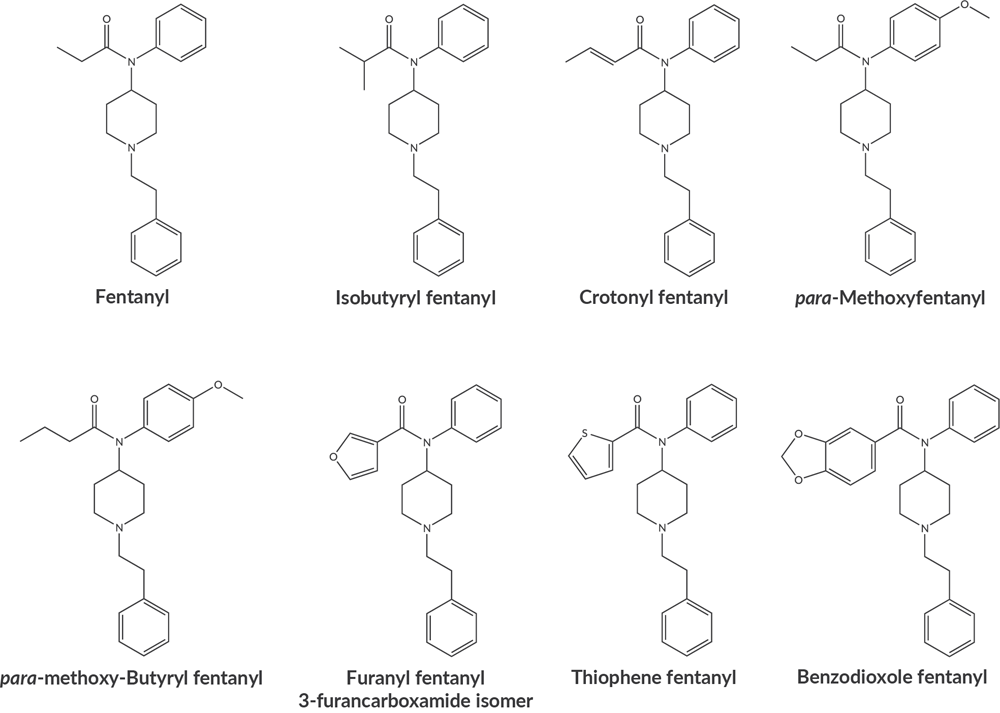
Seven fentanyl analogs were investigated alongside fentanyl, morphine, and buprenorphine in Varshneya, N.B., Hassanien, S.H., Holt, M.C., et al. Respiratory depressant effects of fentanyl analogs are opioid receptor-mediated. Biochem. Pharmacol. 114805 (2021).
"The CDC recently reported that for the 12-month period ending March 2021, drug overdose deaths are estimated to be near 100,000 in the United States. Exposure to fentanyl and its many analogs have significantly contributed to this ongoing crisis. Cayman Chemical, as part of our continued commitment to scientific research, was pleased to be part of a multi-disciplinary collaboration geared toward trying to understand the mechanism behind the powerful respiratory depressant effects of these substances that ultimately leads to overdose fatalities." said Donna M. Iula, Ph.D., Vice President of Forensic Chemistry.
Lead author Neil B. Varshneya, Ph.D., said "The Forensic Chemistry Division of Cayman Chemical Company has been a phenomenal research partner in the quest to understand emerging substances of abuse, specifically in their efforts to synthesize high-quality reference standards for the pharmacological characterization of novel synthetic opioids. Through our academic-industrial collaboration, VCU and Cayman added to our collective knowledge of the contributions of fentanyl analogs to the ongoing opioid crisis around the globe and highlighted the need for further research in this area."
To help laboratories identify fentanyl analogs as well as other synthetic opioids, Cayman has produced a range of reference materials and analytical standards, covering both parent compounds and metabolites, as well as isotopically labeled products for use as internal standards. Below are the reference standards used in this publication but many more can be found on our website.
Fentanyl Reference Standards Used in this Publication
Isobutyryl fentanyl (hydrochloride)
para-Methoxyfentanyl (hydrochloride)
para-methoxy-Butyryl fentanyl (hydrochloride)
Furanyl fentanyl 3-furancarboxamide isomer (hydrochloride)
Thiophene fentanyl (hydrochloride)
See all fentanyl reference standards
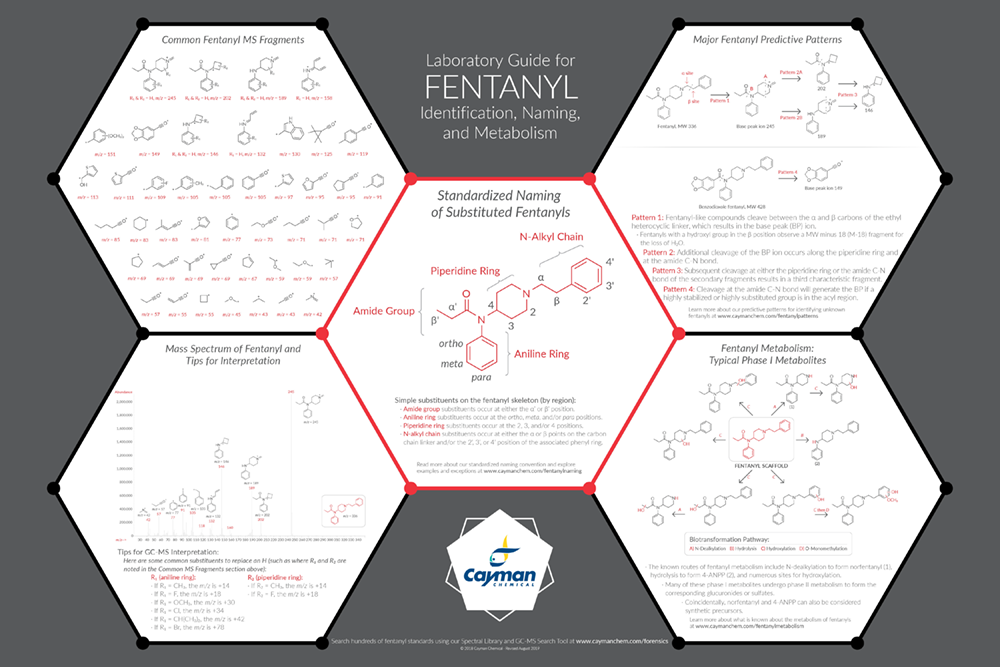
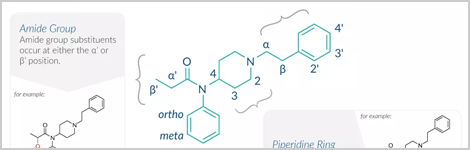
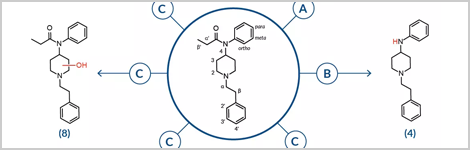
To help bench chemists and toxicologists identify novel fentanyl analogs, we developed the Laboratory Guide for Fentanyl Identification, Naming, and Metabolism, a wall poster that summarizes naming of fentanyl analogs, common MS fragments, tips for interpretation of mass spectra, major predictive patterns, and typical phase I metabolites.
You May Also Be Interested In
|

Contact Info
Cayman Chemical1180 East Ellsworth RoadAnn Arbor, Michigan 48108 USAToll Free: (800) 364-9897(USA and Canada only)Fax: (734) 971-3640


