
News & Announcements
Meet the Expert: Novel Psychoactive Substances
Article from 2021-09-08
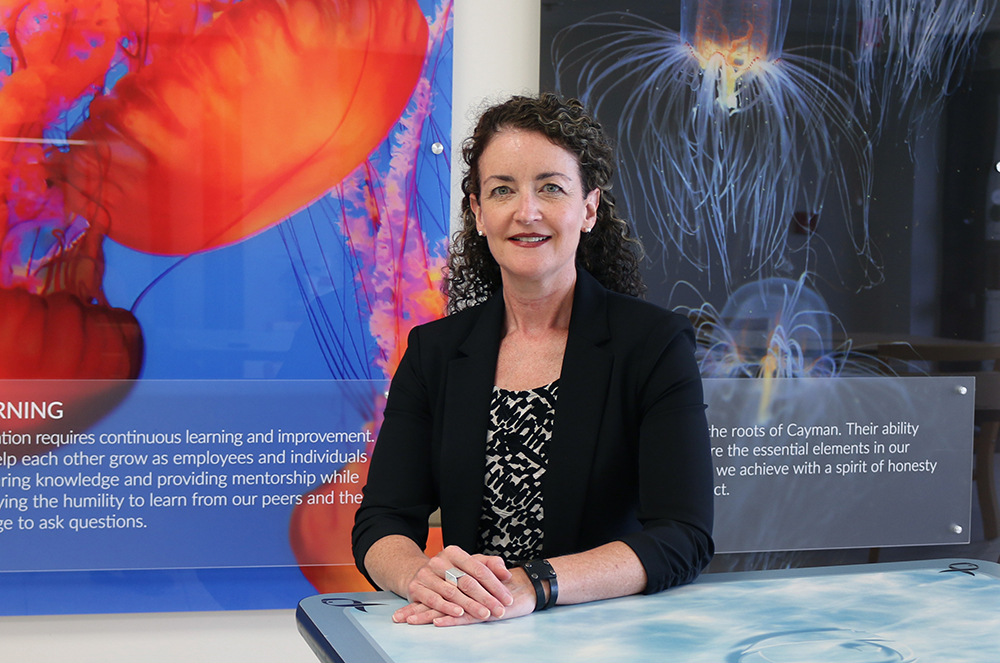
Cayman is an important stakeholder in the field of emerging drugs of abuse by providing high-purity reference standards to federally licensed laboratories and qualified academic research institutions. Our highly trained chemists provide solutions to quickly identify and understand the physiological and toxicological properties of new psychoactive substances (NPS). Cayman’s Forensic Chemistry Division synthesizes and qualifies a range of analytical standards including synthetic cannabinoids, cathinones, phenethylamines, amphetamines, opioids, benzodiazepines, tryptamines, lysergamides, and phytocannabinoids, among many others. Reference materials (RMs) and certified reference materials (CRMs) accredited to meet ISO/IEC 17025:2017 and ISO 17034:2016 standards are made available for quantitative or qualitative testing that requires highly traceable references. Custom synthesis and analytical services are also available to help identify or confirm NPS and their metabolites. We sat down with the Vice President of Forensic Chemistry, Donna M. Iula, Ph.D., to discuss the work she is doing to keep abreast of the rapidly changing NPS landscape and oversee the manufacture of fit-for-purpose analytical reference standards and ISO-certified materials.
What is your background and how does that experience relate to the work you do today?
My Ph.D. and post-doctoral fellowship are in the field of synthetic organic chemistry. I applied that expertise toward drug discovery in the pharmaceutical industry where I worked for several years after my academic training. I grew as a medicinal chemist while working as part of an interdisciplinary team dedicated to the discovery and development of new drug targets to address unmet medical needs. During my years in the pharmaceutical industry, I gained experience with structure-activity relationship studies plus I learned a lot about pharmacology, toxicology, and drug metabolism. My education and previous professional experience prior to joining Cayman really prepared me for my role in helping Cayman stay on top of emerging drugs of abuse trends. The elucidation of the structure of a new drug substance and the ability to predict what new illicit drugs might be next to emerge out of a clandestine lab takes an understanding of how drugs are synthesized, a knowledge of analytical chemistry, and pharmacology. The experience I have in those areas translates into me being able to quickly prioritize what reference standards Cayman should offer (parent drugs, metabolites, and internal standards). While I do not have a degree in forensic chemistry or forensic toxicology, my knowledge of these fields has grown significantly over the years, and I have enjoyed collaborating with the forensic community who has been so welcoming. My role as Vice President of the Forensic Chemistry Division doesn't allow me time to spend in the lab synthesizing molecules anymore, but I have an incredible team of dedicated and skillful chemists who work hard every day at developing new synthetic routes and analytical methods. They are such a pleasure to work with!
What are some of the greatest challenges forensic chemists and toxicologists face with the current pace of NPS proliferation, and how is Cayman helping to ease those demands?
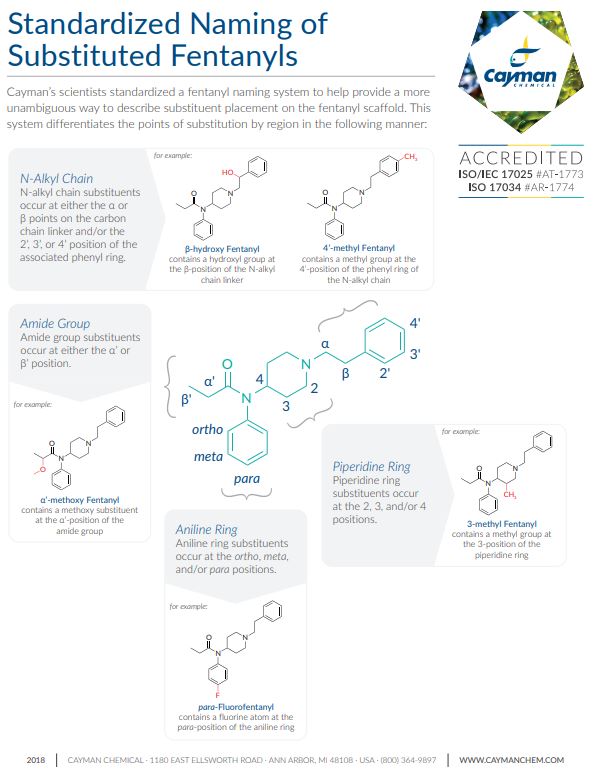
Forensic chemists and toxicologists face quite a few challenges in the face of the rapidly changing designer drug landscape. One of those challenges is the demand for quick access to reference standards to rapidly identify and confirm the structure of emerging NPS. This is one of the areas of need where my team and I actively seek to provide value to the forensic community. Through various mechanisms, we monitor and track intel on the changing designer drug scene, so we often have an early knowledge of an NPS that is circulating somewhere in the world. We have specialists on our team who are subject matter experts in several drug classes and so our skilled team of scientists are equipped with the tools to interpret new analytical data, design, and carry out the synthesis of a reference standard, and even predict what its major metabolites might be. An additional big challenge is NPS naming, and this is another major area of focus where the Cayman Forensic Chemistry team is actively trying to help. An example of that is the effort we put into standardizing the naming of fentanyl analogs.
Download the PDF
I recognized the need to write and share a document that could serve as a guide to understanding the naming system that we had decided to use for our fentanyl standards. Due to the enormous positive feedback on that work, I hope to replicate that effort for other NPS classes. Our free Cayman Spectral Library and online GC-MS Drug Identification Tool that we offer are widely used and are often cited as critical resources for the forensic community.
Because there is no universal naming scheme, a lot of confusion can arise when forensic chemists and toxicologists communicate the identity of an NPS. You have been leading the way in establishing standard naming conventions. How have collaborations and relationships you've made shaped Cayman's naming system, and what is Cayman's approach to naming NPS compounds?
NPS naming is a topic that stirs up a lot of different emotions from people—from confusion to frustration to amusement. Dr. Alex Krotulski, the Associate Director at The Center for Forensic Science Research & Education (CFSRE), and I just gave a webinar on the topic for the Forensic Technology Center of Excellence (FTCoE) in July 2021. Some of the personal goals I had for that webinar were to a) highlight the various origins of NPS names, b) illustrate that multiple naming conventions can exist for any given compound class leading to multiple synonyms, and c) emphasize that consistency in naming is critical for effective communication. Alex and I have known each other for many years and have common interests in this field, which led to that successful webinar collaboration. Just a few months after that webinar, Alex and I took the lead to develop a naming convention for a new core scaffold of synthetic cannabinoids being encountered in forensic casework: MDA-19 and its related analogs: BZO-HEXOXIZID, 5F-BZO-POXIZID, and BZO-POXIZID. The rapid naming collaboration and dissemination of our document serves as a model for how to tackle previously unnamed NPS. Cayman's approach to naming a new substance is to avoid re-inventing the wheel. We do a lot of background research on any new substance we hear of to gain an understanding of its history and try to determine if a well-established name or a naming convention for it already exists. If an established name exists or if we decide to utilize an existing naming convention, we typically do not deviate from that. The optimal name is one that strikes a balance between being both readily recognizable and hopefully unambiguous. Where necessary, we will reach out to external collaborators for advice and in the webinar that I mentioned earlier, Alex and I discuss successful examples of that.
Where else do you see opportunity for relationships between the private and public sectors?
It's very important for public entities to recognize and include private sector stakeholders in discussions about NPS, and I am happy to say that I have seen a trend toward increased collaboration. For example, I participated in several Expert Working Groups organized by public entities over the past few years. In 2019, I spent a week at the United Nations in Vienna, Austria to serve on an international expert panel gathered by the International Narcotics Control Board to discuss the trafficking of fentanyls. I was honored that my perspective was sought and pleased that I had a lot of valuable info to contribute to the group. The group is meeting again in September 2021, and it's a great opportunity to strengthen the relationships needed to effectively tackle the NPS issue. Currently, I am a member of the Medicolegal Death Investigation Data Working Group, which is comprised of experts in forensic toxicology, members of the DEA, the Centers for Disease Control (CDC), the National Institute of Justice's FTCoE at RTI International, the CFSRE, and medical examiners. The subcommittee I am on is tackling the topic of drug classification and naming of NPS, and we hope to issue formal recommendations soon.
You have also been collaborating with the CDC to get comprehensive panels of analog reference standards in the hands of testing labs to detect current and emerging opioids. How did that partnership come about for Cayman to manufacture and distribute part of the CDC's Traceable Opioid Material® Kits product line?
Around the time that the opioid epidemic was raging across the United States and testing labs were struggling to keep up with the newest fentanyl analogs that were rapidly being introduced on the illicit market, the CDC reached out to us to see how we could partner together to provide a tool that would enable labs across the US to detect the presence of the various opioid NPS. Given our extensive catalog of drug reference standards, they naturally felt we could assist with developing an effective surveillance tool. The original Fentanyl Analog Screening (FAS) Kit was met with such success that we collaborated on the development of supplemental versions (V1, V2, V3, and V4) that included newer fentanyl analogs as well as other emerging synthetic opioids. Having access to these kits free-of-charge allowed cash-strapped labs to have access to 250 relevant reference standards to screen for the presence of the most current emerging opioid drugs of abuse. The opioid crisis has not abated, and we continue to see the proliferation of new synthetic opioids.
Where do you see the next trends in classes of NPS emerging?
The pandemic has had a huge impact on the mental health of many people and unfortunately, I am hearing more and more about individuals looking for ways to cope through drug experimentation. We have a huge mental health crisis on our hands, and there aren't a lot of resources for people to turn to. People are increasingly resorting to online vendors selling 'research chemicals' in search of ways to get through a day without pain, to seek some pleasurable experience, or to completely dissociate from their troubles. The world is an increasingly scary place, and people look for ways to both escape and/or have a sense of control, so I envision we will continue to see new analogs that fall outside of existing regulatory control from several mood-altering drug classes. While synthetic cannabinoids, hallucinogens, benzodiazepines, synthetic opioids, and stimulants have been used on the recreational drug scene for years, we continue to see new analogs appearing every year. As clandestine labs turn to different and possibly more obscure structural classes to circumvent regulations, we see the emergence of substances that are less well-studied in terms of efficacy and toxicity, and that's scary from a public health perspective. The one trend everyone has recognized recently is the uptick in designer benzodiazepine use, and we are keeping an eye on the need to meet that reference standard demand. To assist with that, we developed an analytical standards panel (similar to the kit we prepared with the CDC for fentanyls) that contains 53 of the most relevant benzodiazepine standards.
Compared to other companies that offer forensic standards, what makes Cayman stand out in this field?
What I hear from the forensic community is that we stand out because of our extensive catalog, the speed with which we can introduce NPS standards, our quick response to inquiries, and our collaborative spirit. I have a very dedicated staff of expert scientists in this field, and we are all so very passionate about what we do. We love to create and share tools and resources that meet the emerging needs of our colleagues around the world. The lab guide wall posters that we have developed, for example, have been widely used and appreciated by forensic scientists. Our aim is to take the enormous wealth of collective knowledge that our team has and distill it down into easy-to-use informative guides! At our core, we are scientists. We are scientists who love to work collaboratively internally and externally to learn new things, advance our collective understanding of our field of study, share knowledge, and solve problems. If we ever cross paths at a conference, please introduce yourself. I'd love to meet you and talk about chemistry!
You May Also Be Interested In
 |  Standardized Naming System for the Cinnamylpiperazine Class of Synthetic Opioids |

MTE
Contact Info
Cayman Chemical1180 East Ellsworth RoadAnn Arbor, Michigan 48108 USAToll Free: (800) 364-9897(USA and Canada only)Fax: (734) 971-3640


