
News & Announcements
New Product Spotlight: 3'3'-cGAMP ELISA Kit
New Product Spotlight: 3'3'-cGAMP ELISA Kit
Article from 2022-09-15
Cayman Chemical, in collaboration with the nucleotide experts at Biolog Life Science Institute, has developed a new 3’3’-cGAMP ELISA Kit (Item No. 502130) to measure 3’3’-cyclic GMP-AMP (3'3'-cGAMP) levels in bacterial and mammalian cell lysates and cell supernatants. This new assay kit is sensitive, selective, and independently validated by LC-MS/MS to ensure accurate, reliable results.
Assay Kit At-A-Glance
| Sensitivity | |
Assay Range | 78-10,000 pM |
Midpoint (50% B/B0) | 818 pM |
Sensitivity (80% B/B0) | 210 pM |
LLOD | 26 pM |
| Sample types | Bacterial and mammalian cell lysates and cell supernatants |
| Run time | Under 3 hours |
| Readout | Colorimetric (Abs = 450 nm) |
| LC-MS/MS correlation | LC-MS/MS of transformed E. coli samples shows excellent correlation with values measured by the 3’3’-cGAMP ELISA Kit |
| Samples | 24 samples in triplicate or 36 samples in duplicate |
About 3'3'-cGAMP
3'3'-cGAMP is a bacterial cyclic dinucleotide (CDN) second messenger that has been shown to regulate processes including phage response, osmotic stress response, bacterial motility, and biofilm formation.1 In Vibrio cholerae, 3'3'-cGAMP is synthesized from ATP and GTP by DncV, which belongs to the cGAS/DncV-like nucleotidyltransferase (CD-NTase) superfamily (Figure 1). DncV is structurally analogous to the cyclic GMP-AMP synthase (cGAS) enzyme that synthesizes 2'3'-cGAMP in eukaryotes. In deltaproteobacteria, however, 3'3'-cGAMP is instead synthesized by Hypr GGDEF proteins. 3'3'-cGAMP is degraded by phosphodiesterases (PDEs) including PmxA in Myxococcus xanthus and V-cGAP1, V-cGAP2, V-cGAP3, and VcEAL in V. cholerae. 3'3'-cGAMP can bind to recombinant human stimulator of interferon genes (STING) and it induces IFN-β and IL-10 responses in certain mouse tissues.2,3
Figure 1. Synthesis and degradation of 3'3'-cGAMP.
About the Assay
Cayman's 3'3'-cGAMP ELISA Kit is an easy-to-use competitive ELISA, with all necessary reagents included and a straightforward protocol that provides rapid results in under three hours.
The assay is based on competition between free 3'3'-cGAMP in samples (or standards) and 3'3'-cGAMP conjugated to HRP (3'3'-cGAMP-HRP tracer) for binding to a 3'3'-cGAMP monoclonal antibody. Briefly, samples are added to IgG-coated wells along with 3'3'-cGAMP monoclonal antibody and 3'3'-cGAMP-HRP tracer (Figure 2). After two hours of incubation, plates are washed to remove unbound reagents and developed with a TMB substrate solution containing an HRP substrate. This results in formation of a colorimetric product that can be detected by a plate reader at 450 nm. The absorbance intensity is proportional to the amount of 3'3'-cGAMP-HRP tracer bound to the well, and therefore inversely proportional the concentration of 3'3'-cGAMP in the tested sample.
Figure 2. Schematic of the ELISA. For the complete assay protocol, please refer to the kit booklet (PDF).
High Sensitivity and Specificity
Cayman's 3'3'-cGAMP ELISA Kit uses a highly specific 3'3'-cGAMP monoclonal antibody for excellent sensitivity and low cross reactivity to related or structurally similar molecules. The assay has a range of 78-10,000 pM, with a midpoint (50% B/B0) of 818 pM, a sensitivity (80% B/B0) of approximately 210 pM, and a lower limit of detection (LLOD) of 26 pM (Figure 3).
Figure 3. Typical standard curve.
This kit demonstrates a high degree of specificity, with minimal detection of 3’2’-cGAMP, 2’3’-cGAMP, 2’2’-cGAMP, cyclic di-GMP, and cyclic di-AMP.
Cross reactivity of the 3'3'-cGAMP ELISA Kit
| Compound | Cross Reactivity |
| 3'3'-cGAMP | 100% |
| 3'2'-cGAMP | 0.018% |
| 2'3'-cGAMP | 0.006% |
| Cyclic di-GMP | 0.004% |
| 2'2'-cGAMP | 0.002% |
| pApG | 0.002% |
| ATP | <0.001% |
| GTP | <0.001% |
| AMP | <0.001% |
| GMP | <0.001% |
| cAMP | <0.001% |
| cGMP | <0.001% |
| Cyclic di-AMP | <0.001% |
Independently Validated by LC-MS/MS
Values obtained by Cayman's 3'3'-cGAMP ELISA Kit exhibit excellent correlation with values obtained by LC-MS/MS (Figure 4). Transformed E. coli samples were generated and measured by LC-MS/MS in the Department of Microbiology & Molecular Genetics by the Waters Lab at Michigan State University and compared to values measured by Cayman's 3'3'-cGAMP ELISA Kit.4 ELISA values were obtained from multiple dilutions of each sample.
Figure 4. LC-MS/MS Correlation of 34 independent transformed E. coli samples.
For additional information on the performance of this kit, including spike and recovery and linearity data, please refer to the kit booklet (PDF).
The Cayman Advantage
At Cayman, we have an exceptional understanding of assay development, validation, and performance, and we value the importance of integrity in scientific research. Each of our assay kits undergoes rigorous quality testing to certify high precision and accuracy to deliver the sensitivity and specificity needed to detect biologically significant analyte levels. Our attention to these details ensures you will obtain reproducible results, from day to day and lot to lot, with expert technical support readily available to assist you. Another key advantage is that the scientists who directly develop our products also offer custom assay design and optimization.
Our 3'3'-cGAMP ELISA Kit is also complemented by our comprehensive CDN product line, which includes CDNs and negative controls, inhibitors and activators of cGAS-STING signaling, and more. Explore the resources below to discover our full line of bacterial and mammalian CDN and cGAS-STING signaling products.
You May Also Be Interested In
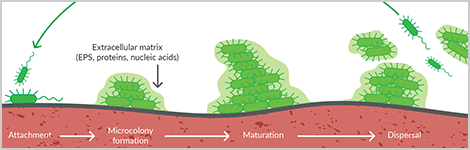 Bacterial Cyclic Dinucleotides Regulate Biofilm Formation |  Bacterial Signaling and Sensing |
 STING Signaling Pathway |  Why Cayman Assay Kits? |
References
1. Yoon, S.H. and Waters, C.M. The ever-expanding world of bacterial cyclic oligonucleotide second messengers. Curr. Opin. Microbiol. 60, 96-103 (2021).Contact Info
Cayman Chemical1180 East Ellsworth RoadAnn Arbor, Michigan 48108 USAToll Free: (800) 364-9897(USA and Canada only)Fax: (734) 971-3640


