
News & Announcements
Research Tools for Psychoactive Mushroom Components & Their Metabolites
Article from 2023-07-06
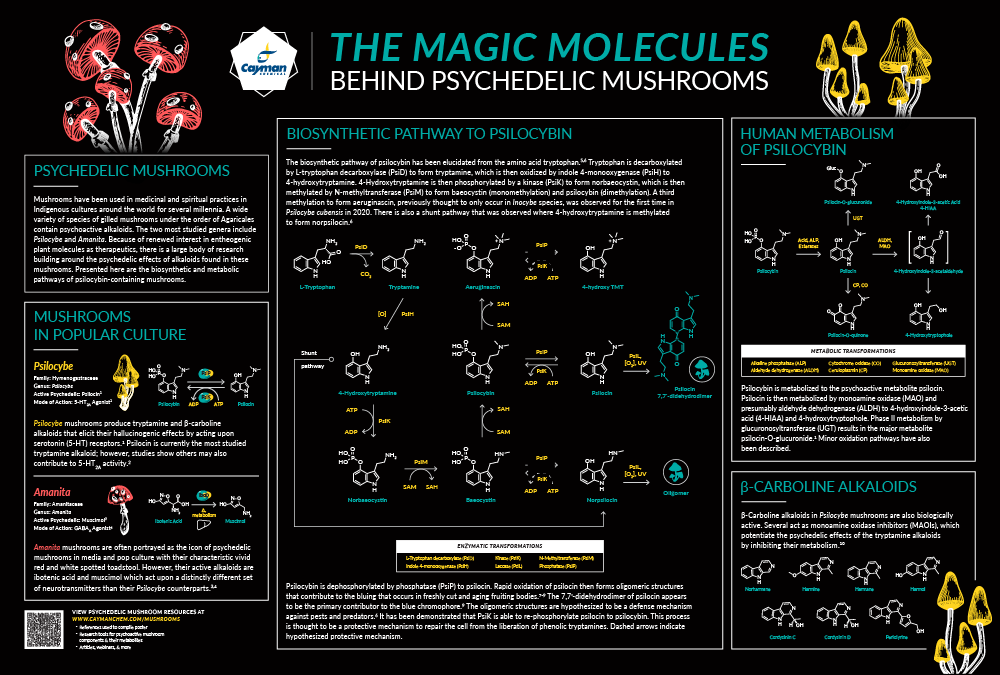
Mushrooms have been used in medicinal and spiritual practices in Indigenous cultures around the world for several millennia. A wide variety of species of gilled mushrooms under the order of Agaricales contain psychoactive alkaloids. The two most studied genera include Psilocybe and Amanita. Because of renewed interest in entheogenic plant molecules as therapeutics, there is a large body of research building around the psychedelic effects of alkaloids found in these mushrooms.
Download or Request a Lab Wall Poster
Psilocybe Mushrooms
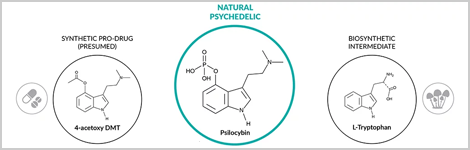
Psilocybe mushrooms produce tryptamine and β-carboline alkaloids that elicit their hallucinogenic effects by acting upon serotonin (5-HT) receptors.1 Psilocin is currently the most studied tryptamine alkaloid; however, studies show others may also contribute to 5-HT2A activity.2
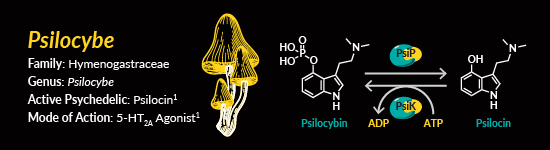
Figure 1. Summary of Psilocybe mushrooms.

Tryptamine Analytical Standards Panel
Contains 64 analytical reference materials and standards categorized as tryptamines and tryptamine metabolites.
Biosynthetic Pathway of Psilocybe
The biosynthetic pathway of psilocybin has been elucidated from the amino acid tryptophan.3,4 Tryptophan is decarboxylated by L-tryptophan decarboxylase (PsiD) to form tryptamine, which is then oxidized by indole 4-monooxygenase (PsiH) to 4-hydroxytryptamine. 4-Hydroxytryptamine is then phosphorylated by a kinase (PsiK) to form norbaeocystin, which is then methylated by N-methyltransferase (PsiM) to form baeocystin (monomethylation) and psilocybin (dimethylation). A third methylation to form aeruginascin, previously thought to only occur in Inocybe species, was observed for the first time in Psilocybe cubensis in 2020. There is also a shunt pathway that was observed where 4-hydroxytryptamine is methylated to form norpsilocin.4
Figure 2. The biosynthetic pathway of psilocybin and related alkaloids in Psilocybe mushrooms. Dashed arrows indicate hypothesized protective mechanism.

Mushroom Phosphorylated Tryptamine Mixture (CRM)
Contains psilocybin, aeruginascin, baeocystin, norbaeocystin
Psilocybe Components | Item No. |
| Aeruginascin | 31582 | 37762 (CRM) |
| Psilocybin | 14041 | 9003134 (CRM) |
| Baeocystin | 31583 | 37763 (CRM) |
| Norbaeocystin | 31584 | 37764 (CRM) |
| 4-hydroxy TMT (iodide) | 33670 | 38032 (CRM) |
| Psilocin | 11864 | 9003135 (CRM) |
| Norpsilocin | 23586 | 37943 (CRM) |
| 4-hydroxytryptamine (fumarate) | 9002547 | 38031 (CRM) |
| Tryptamine | 33682 |
| L-Tryptophan | 29600 |
Deuterated versions of many Psilocybe mushroom components are available from Cayman.
Deuterated Psilocybe Components | Item No. |
| Aeruginascin-d3 | 37124 |
| Psilocybin-d4 | 33760 | 35092 (CRM) |
| Psilocybin-d6 | 34608 |
| Psilocybin-d10 | 33761 |
| Baeocystin-d4 | 37125 |
| Psilocin-d6 | 34780 |
| Psilocin-d10 | 31734 | 37038 (CRM) |
| Norpsilocin-d4 | 37127 |
| Tryptamine-d4 (hydrochloride) | 33538 |
Psilocybin is dephosphorylated by phosphatase (PsiP) to psilocin. Rapid oxidation of psilocin then forms oligomeric structures that contribute to the bluing that occurs in freshly cut and aging fruiting bodies.5-7 The 7,7'-didehydrodimer of psilocin appears to be the primary contributor to the blue chromophore.7 The oligomeric structures are hypothesized to be a defense mechanism against pests and predators.4 It has been demonstrated that PsiK is able to re-phosphorylate psilocin to psilocybin. This process is thought to be a protective mechanism to repair the cell from the liberation of phenolic tryptamines.
Figure 3. Oxidation of psilocin and norpsilocin produces the blue color observed in Psilocybe mushrooms.
Human Metabolism of Psilocybin
Psilocybin is metabolized to the psychoactive metabolite psilocin. Psilocin is then metabolized by monoamine oxidase (MAO) and presumably aldehyde dehydrogenase (ALDH) to 4-hydroxyindole-3-acetic acid (4-HIAA) and 4-hydroxytryptophole. Phase II metabolism by glucuronosyltransferase (UGT) results in the major metabolite psilocin-O-glucuronide.1 Minor oxidation pathways have also been described.
Figure 4. Human metabolism of psilocybin to the psychoactive compound psilocin and downstream metabolites.
Psilocybin Metabolites | Item No. |
| Psilocin | 11864 | 9003135 (CRM) |
| 4-Hydroxyindole-3-acetic Acid | 33632 |
Cayman continually introduces new CRMs and analytical standards as the research evolves.
β-Carboline Alkaloids
β-Carboline alkaloids in Psilocybe mushrooms are also biologically active. Several act as monoamine oxidase inhibitors (MAOIs), which potentiate the psychedelic effects of the tryptamine alkaloids by inhibiting their metabolism.8
Figure 5. Structures of known β-carboline alkaloids in Psilocybe mushrooms.
β-Carboline Alkaloids Mixture
Contains harmane, norharmane, harmol, harmine, and cordysinin C/D.
β-Carboline Alkaloids | Item No. |
| Harmane | 33843 |
| Norharmane | 33845 |
| Harmol | 33844 |
| Harmine | 35146 |
| Tetrahydroharmine | 35037 |
| Cordysinin C/D | 38207 |
Amanita muscaria Mushrooms
Amanita mushrooms are often portrayed as the icon of psychedelic mushrooms in media and pop culture with their characteristic vivid red and white spotted toadstool. However, their active alkaloids are ibotenic acid and muscimol which act upon a distinctly different set of neurotransmitters than their Psilocybe counterparts.1,2,9,10
Figure 6. Summary of Amanita mushrooms.
Amanita muscaria Components | Item No. |
| Ibotenic Acid | 38029 |
| Muscimol | 38030 |
Mushroom Toxins
Misidentification of mushrooms can lead to severe poisoning and death. Muscarine, a potent cholinergic receptor agonist, can be found in A. muscaria as well as certain psilocybin-containing species such as Inocybe.11 Certain species of Amanita contain deadly cyclopeptide toxins (amatoxins and phallotoxins) that cause hepatic and renal failure.12A. bisporigera (also known as Destroying Angel) and A. pholloides (also known as Deathcap) are responsible for most fatal mushroom poisonings worldwide.13 Their toxicity stems from a lack of medical intervention strategies, however, researchers have recently discovered that indocyanine green could act as a possible antidote.14
Amanita Toxins | Item No. |
| β-Amanitin | 18142 |
| α-Amanitin | 17898 |
| Phallacidin | 18146 |
| Phalloidin | 18039 |
| (+)-Muscarine (tosylate) | 38853 |
Cayman offers a comprehensive portfolio of products including ISO Certified Reference Materials (CRMs) for Psilocybe and Amanita mushroom components and their metabolites. Cayman will continue to frequently add new products and CRMs to help make your research possible.
Don't see what you're looking for? Contact our sales department for inquiries at sales@caymanchem.com.
You May Also Be Interested In
 The Magic and Chemistry Behind Psychedelic Mushrooms |  Psychedelic Drug Discovery |
 Rediscovering Psilocybin and Its Therapeutic Potential |  Forensic Lab Guide Wall Posters |
References
1. Dinis-Oliveira, R.J. Metabolism of psilocybin and psilocin: Clinical and forensic toxicological relevance. Drug Metab. Rev. 49(1), 84-91 (2017).
2. Glatfelter, G.C., Pottie, E., Partilla, J.S. et al. Structure–activity relationships for psilocybin, baeocystin, aeruginascin, and related analogues to produce pharmacological effects in mice. ACS Pharmacol. Transl. Sci. 5(11), 1181-1196 (2022).
3. Fricke, J., Blei, F., and Hoffmeister, D. Enzymatic synthesis of psilocybin. Angew. Chem. Int. Ed. Engl. 56(40), 12352-12355 (2017).
4. Lenz, C., Sherwood, A., Kargbo, R., et al. Taking different roads: L-Tryptophan as the origin of Psilocybe natural products. Chempluschem 86(1), 28-35 (2020).
5. Gotvaldová K., Hájková, K., Boroviĉka, J., et al. Stability of psilocybin and its four analogs in the biomass of the psychotropic mushroom Psilocybe cubensis. Drug Test. Anal. 13(2):439-446 (2021).
6. Lenz, C., Wick, J., Braga, D., et al. Injury-triggered blueing reactions of Psilocybe "magic" mushrooms. Angew. Chem. Int. Ed. Engl. 59(4):1450-1454 (2019).
7. Lenz, C. Dörner, S., Sherwood, A., et al. Structure elucidation and spectroscopic analysis of chromophores produced by oxidative psilocin dimerization. Chemistry Eur. J. 27(47), 12166-12171 (2021).
8. Dörner, S., Rogge, K., Fricke, J., et al. Genetic survey of Psilocybe natural products. Chembiochem 23(14):e202200249 (2022). See also: Blei, F., Dörner, S., Fricke, J., et al. Simultaneous production of psilocybin and a cocktail of β-carboline monoamine oxidase inhibitors in "magic" mushrooms. Chemistry Eur. J. 26(3):729-734 (2020).
9. Obermaier, S. and Müller, M. Ibotenic acid biosynthesis in the fly agaric is initiated by glutamate hydroxylation. Angew. Chem. Int. Ed. Engl. 59(30):12432-12435 (2020).
10. Voynova, M., Shkondrov, A., Kondeva-Burdina, M., et al. Toxicological and pharmacological profile of Amanita muscaria (L.) Lam. – a new rising opportunity for biomedicine. Pharmacia 67(4):317-323 (2020).
11. Patocka, J., Wu, R., Nepovimova, E., et al. Chemistry and toxicology of major bioactive substances in Inocybe mushrooms. Int. J Mol. Sci. 22(4), 2218 (2021).
12. Govorushko, S., Rezaee, R., Dumanov, J., et al. Poisoning associated with the use of mushrooms: A review of the global pattern and main characteristics. Food Chem. Toxicol. 128:267-279 (2019).
13. Garcia, J., Costa, V.M., Carvalho, A., et al. Amanita phalloides poisoning: Mechanisms of toxicity and treatment. Food Chem. Toxicol. 86:41-55 (2015).
14. Wang, B., Wan, A.H., Xu, Y. et al. Identification of indocyanine green as a STT3B inhibitor against mushroom α-amanitin cytotoxicity. Nat. Commun. 14(1), 2241 (2023).
Contact Info
Cayman Chemical1180 East Ellsworth RoadAnn Arbor, Michigan 48108 USAToll Free: (800) 364-9897(USA and Canada only)Fax: (734) 971-3640


