
News & Announcements
The Latest Research Insights on Hexahydrocannabinol Metabolism
Article from 2024-07-08
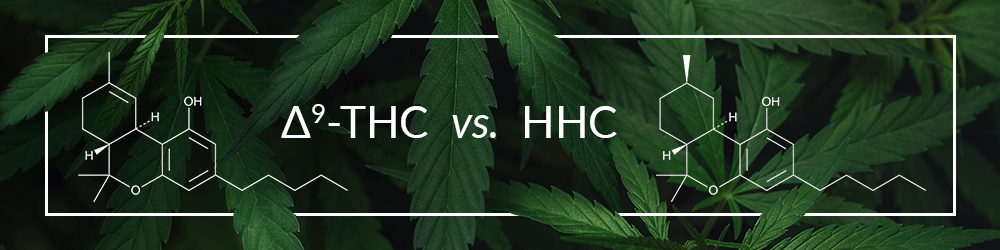
Hexahydrocannabinols (HHCs) are semi-synthetic cannabinoids that are structurally similar to Δ9-tetrahydrocannabinol (Δ9-THC), the main psychoactive component in Cannabis. HHCs are often marketed as "legal" alternatives to Δ9-THC, reportedly producing psychoactive effects similar to Δ9-THC.
Although the pharmacological activity and metabolism of Δ9-THC has been extensively characterized, understanding the human metabolism of HHCs is developing. Elucidating the full metabolic profile of HHCs is critical to understanding the full pharmacology of these novel substances. Research in this area will support efforts to understand their potential toxicity plus aid in the development of methods to detect and monitor HHC use. From what studies have been performed, HHC metabolism has some parallels with Δ9-THC, although there are some distinct differences.
Δ9-THC Metabolism
Cannabis is typically consumed by inhalation (smoking or vaping), oral ingestion (edibles), or other routes (transdermal or sublingual).1 Absorption of Δ9-THC is fastest by inhalation, whereas oral ingestion is slower. The route of administration influences the metabolism of Δ9-THC.2 Inhalation reduces, although does not eliminate, first pass metabolism seen following oral ingestion.
Major Δ9-THC Metabolites
Δ9-THC is rapidly metabolized, undergoing hydroxylation at multiple sites and further oxidation to generate a complex metabolic profile. In fact, more than 80 Δ9-THC metabolites have been identified.3
The primary phase I metabolic pathway involves the liver cytochrome P450 system, especially the CYP2C9 and CYP2C19 isozymes, which metabolize the methyl group at carbon 11 to produce 11-hydroxy-Δ9-THC (11-OH-Δ9-THC; Figure 1), a CB1 receptor agonist with similar potency to Δ9-THC.3 This intermediate metabolite is then further oxidized by CYP450s to 11-nor-Δ9-THC-9-carboxylic acid (11-COOH-Δ9-THC), an inactive metabolite.1 Phase I metabolism also occurs in extrahepatic tissues that express CYP enzymes, including the lungs, brain, and small intestine.2
Glucuronidation of 11-COOH-Δ9-THC is the final step in the biotransformation of Δ9-THC. UDP-glucuronosyltransferase (UGT) enzymes catalyze the addition of glucuronic acid to the metabolite, improving its water solubility and facilitating urinary excretion.4 Among the major Δ9-THC metabolites, glucuronidated 11-COOH-Δ9-THC is the most abundant in urine, whereas 11-OH-Δ9-THC is more abundant in feces.5
Figure 1. The major pathway of Δ9-THC metabolism.
Minor Δ9-THC Metabolites
In addition to 11-COOH-Δ9-THC, other metabolites of Δ9-THC are produced, although they are less abundant. These minor Δ9-THC metabolites are produced by oxidation along the five-carbon side chain and/or cyclohexenyl ring, including at the carbon 8 position by CYP3A4 to produce the minor metabolites 8β-hydroxy-Δ9-THC (8β-OH-Δ9-THC) and 8β,11-dihydroxy-Δ9-THC (8β,11-diOH-Δ9-THC; Figure 2).6,7 Accordingly, many different Δ9-THC metabolite combinations may be detected in biological samples. As with the primary Δ9-THC metabolites, COOH residues on these less abundant metabolites are also subject to glucuronidation, with these glucuronidated products detectable in urine.
Figure 2. A minor pathway of Δ9-THC metabolism leading to the formation of 8-OH and 8β,11-diOH Δ9-THC metabolites.
Useful Markers of Consumption
While Δ9-THC has a relatively short half-life in serum, 11-COOH-Δ9-THC has a much longer half-life, ranging from days to weeks.8 This is due to the accumulation of 11-COOH-Δ9-THC in fatty tissues and its consequent delayed elimination. Accordingly, the detection of 11-COOH-Δ9-THC metabolites is a useful marker in forensic drug testing for Cannabis consumption for approximately one month after use.
HHC Metabolism
HHCs are semi-synthetic derivatives of THCs that are widely sought-after for both medicinal and recreational purposes and may be administered by vaping, ingestion, or combustion. HHCs are produced synthetically from CBD after the conversion to Δ8-THC (or Δ9-THC) followed by catalytic hydrogenation.9 This reaction forms a new stereocenter at carbon 9, which is not present in Δ8- or Δ9-THC, producing a diastereomeric mixture of HHCs comprised of 9(R)-HHC and 9(S)-HHC epimers (Figure 3).10 Most of the psychoactive effects of HHCs are attributed to 9(R)-HHC; the 9(S)-HHC epimer has minimal cannabimimetic activity.11
Figure 3. The formation of 9(R)- and 9(S)-HHC epimers during HHC synthesis.
Similarities with Δ9-THC Metabolism
Overall, the metabolism and elimination kinetics of 9(R/S)-HHC is relatively unknown, though the latest research indicates that there are both similarities and differences compared to the metabolism of Δ9-THC. Like Δ9-THC, the formation and abundance of 9(R/S)-HHC metabolites is dependent on the method of consumption.12
Though detailed human metabolic studies are lacking, it is believed that 9(R/S)-HHC are metabolized at least in part in a manner analogous to Δ9-THC, leading to the formation of the 11-hydroxy metabolites 11-hydroxy-9(R)-HHC (11-OH-9(R)-HHC) and 11-hydroxy-9(S)-HHC (11-OH-9(S)-HHC; Figure 4).
Early studies on acylated 11-OH-HHC metabolites found psychoactivity in Rhesus monkeys. This could be a contributing factor to overall psychoactive effects of HHC, similar to reported activity of 11-OH-Δ9-THC following Δ9-THC consumption.13
Further oxidation of these intermediate metabolites produces the carboxylated metabolites 11-nor-9(R)-carboxy-HHC (11-nor-9(R)-COOH-HHC) and 11-nor-9(S)-carboxy-HHC (11-nor-9(S)-COOH-HHC), which have been detected in human biological samples after deglucuronidation via enzymatic hydrolysis.10,12,14-16
Figure 4. The proposed metabolic pathway for the formation of 11-OH and 11-COOH-HHC metabolites.
Much like metabolism of Δ9-THC, hydroxylation of HHC may occur at several positions of the hydrogenated cyclohexyl ring or the alkyl side chain (Figure 5). Schrimer et al. were able to detect many side-chain hydroxylated HHC metabolites, though most of these metabolites could not be identified at the structural level.12 They were, however, able to detect and identify 4'-OH-HHC in human biological samples following HHC consumption. Additionally, Lindbom et al. reported the positive identification of a 5'-OH-HHC metabolite in urine samples utilizing a synthesized standard, in addition to an unidentified side-chain hydroxylated HHC.17
Figure 5. Possible positions for putative oxidative HHC metabolites.
Differences with Δ9-THC Metabolism
Stereoselective Metabolism of HHC Epimers
The two epimers, 9(R)-HHC and 9(S)-HHC, have different metabolic profiles, which could be attributed, in part, to stereoselective metabolism and elimination.16
Di Trana et al. investigated the metabolic fate of a 50:50 mixture of 9(R)- and 9(S)-HHC after inhalation (the identity of the mixture was confirmed prior to starting the study).16 The authors found that 9(R)-HHC was present in higher concentrations in the blood. However, 9(S)-HHC was present in higher concentrations in the urine. These differences in elimination could explain in part the reported higher potency of the 9(R)-HHC. Indeed, it appears the metabolic enzymes are stereoselective for the two epimers. 9(S)-HHC may be preferentially hydroxylated at carbon 8, whereas carbon 11 is preferred for 9(R)-HHC (Figure 5).16,17 However, both epimers were hydroxylated at carbon 8, forming the metabolites 8(R)-hydroxy-9(R)-HHC (detectable in blood and urine) and 8(S)-hydroxy-9(S)-HHC (detectable only in urine).
8-OH Metabolites of HHC Epimers
Hydroxylation at carbon 8 may play a larger role in HHC metabolism than Δ9-THC metabolism.12,16 There are four possible stereoisomers for 8-hydroxy-HHC: 8(R)-OH-9(R)-HHC, 8(S)-OH-9(S)-HHC, 8(S)-OH-9(R)-HHC, and 8(R)-OH-9(S)-HHC.15 Cayman offers analytical standards that provide coverage of these metabolites (Figure 6).
Figure 6. 8-OH metabolites of 9(R)- and 9(S)-HHC epimers. Stereochemistry at the C9 position of the 8-hydroxy compounds is opposite of the parent HHC compounds due to nomenclature priorities, as described by IUPAC naming conventions.
Some studies have found that the 8(R)-OH-9(R)-HHC and 8(S)-OH-9(S)-HHC metabolites are abundant after HHC consumption in humans, suggesting them as the main metabolite and as a useful marker for HHC consumption.16 However, other studies have noted them as minor metabolites or as undetectable.12,15 Whether 8-OH-HHC metabolites have any value as markers of HHC consumption is a matter of broad and current interest.
Summary of HHC Metabolism
In summary, the metabolism of 9(R/S)-HHC proceeds somewhat similarly to Δ9-THC metabolism, though with some distinct differences, especially regarding the stereoselective metabolism of the 9(R)- and 9(S)-epimers and the formation of 8-OH-HHC metabolites (Figure 7). However, further research is needed to fully characterize the metabolic pathways and identify the full range of HHC metabolites.
Figure 7. An overview of the current understanding of HHC metabolism.
Tentative Markers of Consumption
There is still much work to be done on characterizing the metabolism of HHCs. While HHC metabolites have been detected following consumption, there is little consensus on the profile of detectable HHC metabolites, their relative abundance, ideal biological matrix, or pharmacokinetics. Table 1 summarizes the HHC metabolites that have been identified in human biological samples.10,12,14-16
Table 1. HHC metabolites that have been detected in human biological samples.
| Urinary Metabolites | Plasma Metabolites | Whole Blood |
| 4'-OH-HHC12 | 11-OH-9(R)-HHC14,15 | 11-OH-9(R)-HHC10 |
| 5'-OH-HHC17 | 11-OH-9(S)-HHC14 | 11-OH-9(S)-HHC10 |
| 8(R)-OH-9(R)-HHC12,16,17 | 11-nor-9(R)-COOH-HHC14-16 | 11-nor-9(R)-COOH-HHC10 |
| 8(S)-OH-9(S)-HHC16,17 | 11-nor-9(S)-COOH-HHC14,15 | 11-nor-9(S)-COOH-HHC10 |
| 11-nor-9(R)-COOH-HHC12,15 | ||
| 11-OH-9(R)-HHC12,15-17 | ||
| 11-OH-9(S)-HHC12,17 | ||
| 11-nor-9(S)-COOH-HHC12,15 |
A good marker for consumption is one that is abundant, specific to the target parent compound, and universally detectable across all biological samples. The detection and identification of HHC metabolites is further complicated by the observation that the HHC metabolites 11-OH-HHC and 11-COOH-HHC have also been observed as Δ9-THC metabolites.10 This precludes the use of these HHC metabolites as specific markers of HHC consumption, as these metabolites are shared between HHCs and Δ9-THC.
Summary
Although there are many similarities between the metabolism of Δ9-THC and 9(R/S)-HHC, there are also distinct differences, summarized in Table 2 below.
Table 2. A comparative summary of Δ9-THC and 9(R/S)-HHC metabolism
Δ9-THC vs. HHC | |
| Δ9-THC Metabolism | 9(R/S)-HHC Metabolism *indicates diastereomeric mixture |
| Metabolite formation and abundance is dependent on the method of consumption | Metabolite formation and abundance is dependent on the method of consumption |
| Metabolized by CYP450s (2C9, 2C19, 3A4) | Metabolized by CYP450s Specific isoforms are unknown at this time |
| 11-OH and 11-COOH are major metabolites used as markers of THC consumption | 11-OH and 11-COOH are metabolites - uncertain if these are the major metabolites or best markers of HHC consumption |
| No epimer metabolites at carbon 11 due to lack of stereocenter | Both epimer metabolites formed at carbon 11 due to presence of stereocenter |
| Oxidation of methyl group at carbon 11 is the major pathway | Uncertain what is the major pathway |
| Other metabolites formed by hydroxylation on side chain and/or cyclohexenyl ring | Other metabolites formed by hydroxylation on side chain and/or hexahydro cyclohexyl ring |
| Glucuronidated metabolites detectable in urine | Glucuronidated metabolites detectable in urine |
| Well-known markers for Δ9-THC consumption in a variety of biological samples | No clear markers for HHC consumption at this time for any biological sample |
Future Directions
Experimental studies are just beginning to uncover the metabolism of HHCs. Given the early stage of this field, there is considerable uncertainty on HHC metabolism and best analytical approaches. The ability of analytical methods to detect HHC metabolites appear to be dependent on various factors, including the method of ingestion, biological matrix, and analytical method used. As of now, there is no single method known to us that can comprehensively detect all HHC metabolites across these different factors and no single metabolite that can be used as a marker of HHC consumption.
Available from Cayman
Cayman is the leading provider of research tools for HHCs and other semi-synthetic cannabinoids. We keep abreast of emerging semi-synthetic cannabinoids and respond quickly to provide reference standards as the research evolves.
You May Also Be Interested In

Pharmacology of Hexahydrocannabinols and Other Semi-Synthetic Cannabinoids
References
1. Bardhi, K., Coates, S., Watson, C.J.W., et al. Cannabinoids and drug metabolizing enzymes: Potential for drug-drug interactions and implications for drug safety and efficacy. Expert Rev. Clin. Pharmacol. 15(12), 1443-1460 (2022).
2. Lucas, C.J., Galettis, P., and Schneider, J. The pharmacokinetics and the pharmacodynamics of cannabinoids. Br. J. Clin. Pharmacol. 84(11), 2477-2482 (2018).
3. Vergne, M.J., Reynolds, L., Brown, A., et al. A review on the Impact of Cannabis in society and the analytical methodologies for cannabinoids. Psychoactives 2(1), 37-51 (2023).
4. Huestis, M.A. Human cannabinoid pharmacokinetics. Chem. Biodivers. 4(8), 1770-1804 (2007).
5. Sharma, P., Murthy, P., and Bharath, M.M.S. Chemistry, metabolism, and toxicology of Cannabis: Clinical implications. Iran. J. Psychiatry 7(4), 149-156 (2012).
6. Gasse, A., Pfeiffer, H., Köhler, H., et al. J. 8β-OH-THC and 8β,11-diOH-THC-minor metabolites with major informative value? Int. J. Legal Med. 132(1), 157-164 (2018).
7. Yabut, K.C.B., Winnie Wen, Y., Simon, K.T. et al. CYP2C9, CYP3A and CYP2C19 metabolize Δ9-tetrahydrocannabinol to multiple metabolites but metabolism is affected by human liver fatty acid binding protein (FABP1). Biochem. Pharmacol. 116191 (2024).
8. Huang, W., Czuba, L.C., Manuzak, J.A., et al. Objective identification of Cannabis use levels in clinical populations is critical for detecting pharmacological outcomes. Cannabis Cannabinoid Res. 7(6), 852-864 (2022).
9. Zawatsky, C.N., Mills-Huffnagle, S., Augusto, C.M., et al. Cannabidiol-derived cannabinoids: The unregulated designer drug market following the 2018 Farm Bill. Med. Cannabis Cannabinoids7(1), 10-18 (2024).
10. Falck Jørgensen, C., Schou Rasmussen, B., Linnet, K. et al. Evidence of 11-hydroxy-hexahydrocannabinol and 11-nor-9-carboxy-hexahydrocannabinol as novel human metabolites of Δ9-tetrahydrocannabinol. Metabolites 13(12), 1169 (2023).
11. Russo, F., Vandelli, M.A., Biagini, G., et al. Synthesis and pharmacological activity of the epimers of hexahydrocannabinol (HHC). Sci. Rep. 13(1), 11061 (2023).
12. Schirmer, W., Auwärter, V., Kaudewitz, J., et al. Identification of human hexahydrocannabinol metabolites in urine. Eur. J. Mass Spectrom.(Chichester) 29(5-6), 326-337 (2023).
13. Mechoulam, R., Lander, N., Varkony, T.H., et al. Stereochemical requirements for cannabinoid activity. J. Med. Chem. 23(10), 1068-1072 (1980).
14. Manier, S.K., Valdiviezo, J.A., Vollmer, A.C., et al. Analytical toxicology of the semi-synthetic cannabinoid hexahydrocannabinol studied in human samples, pooled human liver S9 fraction, rat samples and drug products using HPLC-HRMS-MS. J. Anal. Toxicol. 47(9), 818-825 (2023).
15. Kobidze, G., Sprega, G., Montanari, E., et al. The first LC-MS/MS stereoselective bioanalytical methods to quantitatively detect 9R- and 9S-hexahydrocannabinols and their metabolites in human blood, oral fluid and urine. J. Pharm. Biomed. Anal. 240, 115918 (2024).
16. Di Trana, A., Di Giorgi, A., Sprega, G., et al. Disposition of hexahydrocannabinol epimers and their metabolites in biological matrices following a single administration of smoked hexahydrocannabinol: A preliminary study. Pharmaceuticals(Basel) 17(2), 249 (2024).
17. Lindbom, K., Norman, C., Baginski, S., et al. Human metabolism of the semi-synthetic cannabinoids hexahydrocannabinol, hexahydrocannabiphorol and their acetates using hepatocytes and urine samples. Drug Test. Anal. (2024).
Contact Info
Cayman Chemical1180 East Ellsworth RoadAnn Arbor, Michigan 48108 USAToll Free: (800) 364-9897(USA and Canada only)Fax: (734) 971-3640


