
Features
- Purpose built for quantitative mass spectrometry
- Prepared gravimetrically as a solution with a defined concentration
- Packaged in an ampule sealed under argon to maintain product integrity
- Guaranteed to meet MaxSpec® identity, purity, stability, and concentration specifications
Technical Support & Resources
Visit our FAQ
Contact Us
Toll Free Phone (USA and Canada Only): (888) 526-5351
Direct Phone: (734) 975-3888
Product Categories
Application

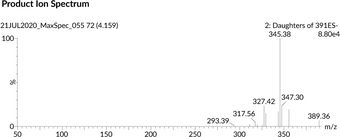
Technical Information
- Cholanoic Acid
- DCA
- NSC 8797
Shipping & Storage Information
Recommended Products
Certificates of Analysis & Batch Specific Data
Provide batch numbers separated by commas to download or request available product inserts, QC sheets, certificates of analysis, data packs, and GC-MS data.
Explore Obesity & Metabolic Disease Resources
Discover high-quality research tools to investigate GLP-1 mechanisms and next-generation metabolic targets.
OBESITY RESEARCH SOLUTIONSProduct Description
Deoxycholic acid (DCA) is a secondary bile acid that is formed via microbial transformation of cholic acid (Item No. 20250) in the colon.1 It can be conjugated to glycine or taurine (Item No. 27031) to produce glycodeoxycholic acid (GDCA; Item No. 20274) or taurodeoxycholic acid (TDCA; Item No. 15935), respectively, in hepatocytes.1,2,3 DCA (0.2% v/v) inhibits spore germination induced by taurocholic acid (TCA; Item No. 16215) in seven C. difficile strains, as well as inhibits growth and decreases the cytotoxicity of C. difficile culture supernatants to Vero cells when used at a concentration of 0.02% v/v.1 It inhibits ionizing radiation-induced p53-dependent transcription in a reporter assay using HCT116 cells when used at a concentration of 200 µM.4 Fecal and intestinal tissue levels of DCA are increased in a rat model of high-fat diet-induced obesity compared with rats fed a normal diet.5 Increased serum DCA levels have been found in patients with colorectal cancer.6
Deoxycholic acid MaxSpec® standard is a quantitative grade standard of deoxycholic acid (Item No. 20756) that has been prepared specifically for mass spectrometry and related applications where quantitative reproducibility is required. The solution has been prepared gravimetrically and is supplied in a deactivated glass ampule sealed under argon. The concentration was verified by comparison to an independently prepared calibration standard. The verified concentration is provided on the certificate of analysis. This deoxycholic acid MaxSpec® standard is guaranteed to meet identity, purity, stability, and concentration specifications and is provided with a batch-specific certificate of analysis. Ongoing stability testing is performed to ensure the concentration remains accurate throughout the shelf life of the product. Note: The amount of solution added to the vial is in excess of the listed amount. Therefore, it is necessary to accurately measure volumes for preparation of calibration standards. Follow recommended storage and handling conditions to maintain product quality.
WARNING This product is not for human or veterinary use.
References & Product Citations
1. Inhibition of spore germination, growth, and toxin activity of clinically relevant C. difficile strains by gut microbiota derived secondary bile acids. Anaerobe 45, 86-100 (2017).
2. Bile acid metabolome after an oral lipid tolerance test by liquid chromatography-
3. Bile acid synthesis: From nature to the chemical modification and synthesis and their applications as drugs and nutrients. Front. Pharmacol. 9, 939 (2018).
4. Deoxycholic acid suppresses p53 by stimulating proteasome-
5. Alterations of bile acids and gut microbiota in obesity induced by high fat diet in rat model. J. Agric. Food Chem. 67(13), 3624-3632 (2019).
6. Increased serum deoxycholic acid levels in men with colorectal adenomas. Gastroenterology 104(1), 145-151 (1993).
DT-
Contact Info
Cayman Chemical1180 East Ellsworth RoadAnn Arbor, Michigan 48108 USAToll Free: (800) 364-9897(USA and Canada only)Fax: (734) 971-3640


