
News & Announcements
Five Ways Our Scientists Helped Make Research Possible
Five Ways Our Scientists Helped Make Research Possible
Article from 2024-07-26
Cayman is more than a supplier of products and services for life science research. We are scientists. We work collaboratively with fellow scientists in academia, biotechnology, and pharmaceutical industries, combining our expertise to solve complex problems and advancing our collective understanding in our shared field of study.
Discover the ways that Cayman scientists helped make research possible for these scientists in these papers published in 2024.
1. Designing New Approaches for Anticancer Drugs
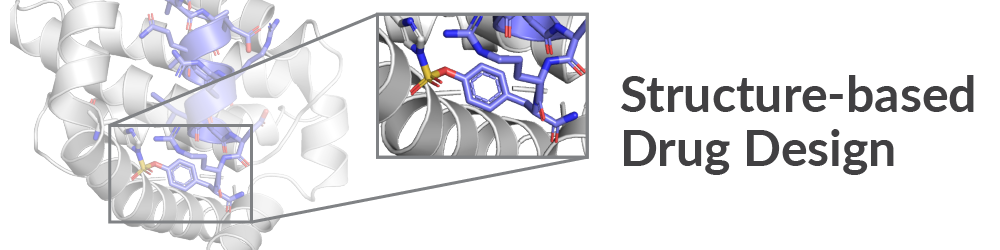
We helped University of California researchers identify a new strategy to target hMcl-1 overexpression in cancer in this project.
Dr. Maurizio Pellecchia, Professor at the University of California, Riverside, School of Medicine, studies ways to target protein-protein interactions for the development of new anticancer drugs. One such approach is by targeting the antiapoptotic protein hMcl-1, which is commonly overexpressed in cancer and associated with treatment resistance.
Building off our first collaboration, our Structure-Based Drug Design team used X-ray crystallography to study how histidine-covalent stapled alpha-helical peptides bind to hMcl-1. X-ray crystallography provides a detailed 3D view of how molecules interact, allowing researchers to see interactions within protein-ligand complexes at the atomic level, which is critical for rational drug design.
Based on the high-resolution X-ray structure, histidine 252 (His 252) in the BH3 binding pocket of hMcl-1 was identified as the targeted residue, and a sulfonamide bond was formed between the peptide and the imidazole side chain of His 252.
With this information, Dr. Pellecchia's team was able to design, synthesize, and characterize a series of stapled alpha-helical peptides targeting hMcl-1. As a critical part of the extensive characterization of these candidates, X-ray crystallography by our team validated the formation of a covalent adduct between these two molecules at His 252 and supported the selection of one covalent stapled peptide (155H1) for further testing.
Peptide 155H1 was found to be potent and nonlytic, interact covalently with hMcl-1 in cells, and sensitize A549 cells to the chemotherapeutic etoposide.
| "I feel very fortunate to collaborate with Dr. Assar and her group at Cayman. Surely, they are skilled in crystallography and have delivered structural information for each and every protein complex that we provided." Maurizio Pellecchia, Ph.D. |
2. Helping Discover Antiviral Lead Candidates
We helped a privately owned pharmaceutical development company identify antiviral lead candidates from their series of existing nitric oxide donors in this collaboration.
Dr. John Schmedtje, President and CEO of Coeurative, Inc., was seeking a partner that could determine if their patented nitric oxide donor compounds, originally developed for cardiovascular disease, could be repurposed as antiviral therapies against SARS-CoV-2.
Cayman's Structural Biology team used an in silico modeling platform to virtually identify nitric oxide donors most likely to bind the SARS-CoV-2 papain-like protease. Using this approach, two promising candidates were identified: CR-0305 and CR-0202. Intriguingly, CR-0305 appeared to have higher affinity towards SARS-CoV-2 compared with other antivirals, including GRL-0617, remdesivir, GS-441524, lopinavir, boceprevir, and ribavirin.
These two promising candidates were synthesized by our Pharmaceutical Chemistry team. These compounds were then used for biophysical characterization studies and in vitro antiviral activity assays. Our Structural Biology team used surface plasmon resonance (SPR) to characterize the binding interactions between these drug candidates and SARS-CoV-2 PLpro, confirming the in silico results and the affinity of these drugs for this protein.
CR-0305 and CR-0202 both inhibited SARS-CoV-2 infection in cells. CR-0305 also showed activity as a coronary vasodilator in ex vivo experiments, suggesting multiple potential therapeutic applications for these compounds.
| "My biotech startup company was operating with limited resources and needed a way to prioritize the synthesis of one or two members of a family of nitric oxide donors on the possibility that some of these compounds might have antiviral properties against SARS-CoV-2. I used the medicinal chemistry services of Cayman Chemical to do the in silico work needed to come up with two hits that later proved to have antiviral properties in vitro. This identified intellectual property and justified a much broader drug development program." John F. Schmedtje Jr., MD |
3. Supporting the Development of Enzyme Screening Assays
This continuation of our existing partnership involved the synthesis of enzyme substrates used in PLCγ screening assays for a research group at Purdue University.
Our work with this group began when Dr. Karson S. Putt, Sr. Managing Director of the Institute for Drug Discovery at Purdue University, contacted Cayman's Chemical Synthesis team with a custom synthesis request for a large quantity of WH-15. WH-15 is a substrate for PLCγ, and the research team wanted to use this substrate in enzyme activity assays to identify new PLCγ modulators.
Our team synthesized multiple known and novel PLCγ substrates that resulted in two papers co-authored by the Purdue researchers. Our team was able to successfully scale up the published method for WH-15 synthesis, and we improved the side chain synthesis to enhance yields and scalability. We also synthesized another PLCγ substrate, XY-69, wherein we experienced similar scaling challenges, but our team worked closely with the researchers at Purdue to provide as much material as possible. This work also permitted the synthesis of C8CF3-coumarin, a novel PLCγ substrate that the researchers were interested in. The results of this work were published in 2023.
In our most recent co-authored paper with the Purdue research team, Cayman chemists designed and synthesized a key intermediate that enabled the preparation of a novel C16CF3-coumarin substrate, which was used in a micelle-based high-throughput screening assay for PLCγ small molecule modulators. Taken together, our contributions have helped identify novel PLCγ substrates that allow for expanded screening techniques in the identification of PLCγ family modulators.
| "Cayman Chemical helped us to significantly advance our project, even while our laboratories were shut down due to COVID-19. We were extremely pleased that Cayman Chemical completed challenging, multi-step, multi-gram syntheses of multiple intermediates that we were able to diversify to various final products. We have since used one of these compounds as a substrate for high-throughput screening campaigns here at Purdue University in our search for potential enzyme modulators." Daniel Beck |
4. Unveiling Semi-Synthetic Cannabinoid Potency
This long-standing collaboration helped shed light on the pharmacology of semi-synthetic cannabinoids, emerging "legal" alternatives to Δ9-THC with little known information about the potency of these compounds.
Dr. Christophe P. Stove, Professor at Ghent University, is an expert in the pharmacology and bioanalysis of emerging drugs of abuse and a long-time collaborator of Cayman's Forensic Chemistry Division. Cayman's forensic chemistry team stays current on semi-synthetic cannabinoid research and recognized a critical need for extensive pharmacological profiling of these compounds. Our team asked Dr. Stove and his team for their help in profiling the in vitro activity of semi-synthetic cannabinoids.
Our timely provision of semi-synthetic cannabinoid reference standards helped play a key role in understanding the effects of semi-synthetic cannabinoids, an area of critically needed research. With these reference standards, Ghent University researchers characterized the CB1 receptor activity of 30 semi-synthetic cannabinoids.
Many THC homologs, analogs, and isomers were found to have greater potential for CB1 receptor activation compared with Δ9-THC in this study, shedding insight into the relatively unknown effects and harm potential of these compounds.
The semi-synthetic cannabinoid reference standards that helped make this research possible are available in our Forensics catalog.
| "Collaborations between academic institutions like Ghent University and science-minded companies like Cayman Chemical—whether formal or informal—truly represent a win-win scenario for both parties. The timely exchange of information and the availability of reference materials is a strong accelerator for scientific progress, as nicely exemplified by the mapping of a wide and uncharted landscape of natural and designer THC variants." Christophe Stove, PharmD, PhD |
5. Identifying Semi-Synthetic Cannabinoid Metabolites
We helped researchers confirm the identification of semi-synthetic cannabinoid metabolites in human biological samples.
Dr. Florian Pitterl, a researcher at the Institute of Legal Medicine of the Medical University of Innsbruck reached out to Cayman's Forensic Chemistry Division because of our experience in analysis of novel psychoactive substances, including semi-synthetic cannabinoids. The authors had detected several hydroxylated, carboxylated, and glucuronidated hexahydrocannabinol (HHC) metabolites in human body fluids and needed assistance with further confirming their identity.
Cayman scientist Jianmei Liu provided LC-MS/MS data for each of the putative individual HHC metabolites they had identified, providing additional support for the proposed identification of the HHC metabolites and shedding insight into the human metabolism of HHCs.
Dr. Herbert Oberacher |
What It's Like to Partner with Cayman
Our scientists work with you to help make your research possible. We offer expert collaboration, open communication, and dedicated scientific support for research projects from basic research to drug discovery and development with a wide range of chemistry and biology services.
Contact Us
Start an inquiry to let us know how we can help make your research possible.
You May Also Be Interested In
 |  |
 |  |
Contact Info
Cayman Chemical1180 East Ellsworth RoadAnn Arbor, Michigan 48108 USAToll Free: (800) 364-9897(USA and Canada only)Fax: (734) 971-3640


