
Lipid Roles in Biology
Structural Lipids
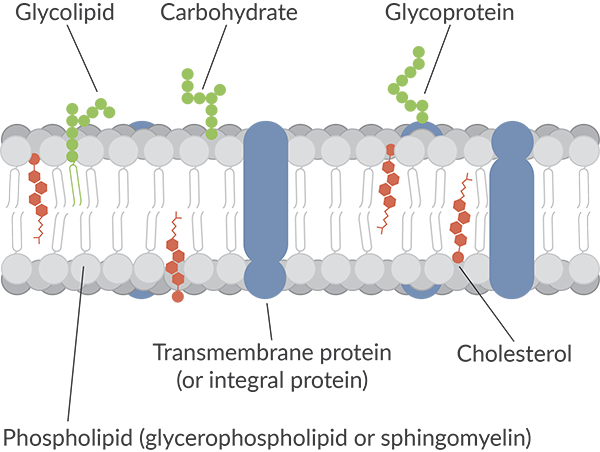
Some lipids serve primarily as structural components of cell membranes. The amphipathic character and shape of glycerophospholipids elicit the formation, in aqueous environments, of lipid bilayers that are the basis of all cellular membranes. Hundreds of different phospholipid molecular species are present in cells, featuring variations in their polar headgroup or acyl tails that give them unique properties to participate in membrane fusion and fission, generate cell signaling lipids, and help secrete lipoproteins. Sterols and sphingomyelins are also essential structural components of membranes.
Cayman LipiDOT Strips™ - PIPs Plus
- Identify protein-lipid interactions using one convenient platform
- Contains several types of phospholipids, including a variety of phosphatidylinositol phosphate (PIP) species, lysophospholipids, and cardiolipin, and more
Lipogenesis & Lipid Storage
During lipogenesis, fatty acids are produced through the repeated addition of two-carbon units (from acetyl-CoA). Fatty acids can then be esterified to glycerol to ultimately form triacylglycerol, or to cholesterol to form cholesterol esters. Triacylglycerols function as fatty acid storage depots that are readily accessible for use in cellular respiration when carbohydrates are not available. They are stored inside lipid droplets, which also serve as a reservoir for cholesterol necessary for membrane formation and maintenance. Lipid droplets maintain energy and redox homeostasis, and they help support endoplasmic reticulum and plasma membrane integrity. They channel fatty acids to mitochondria, help produce lipid mediators, regulate lipolysis and lipophagy, and protect against lipotoxicity. Fatty acids are mobilized from storage through the action of lipases.
LIPID DROPLET BIOLOGY WALL POSTER
- Biological events of lipid droplet formation
- Key functional proteins
- Lipid storage and lipolysis pathways
Lipid Transport
Fatty acids can diffuse across plasma membranes because of their lipophilicity but must be transported through the bloodstream within lipoproteins (e.g., chylomicrons, VLDL, LDL, and HDL), or attached to fatty acid-binding proteins. Lipoprotein lipases release free fatty acids that are then transported into cells, primarily through protein carrier-mediated pathways including fatty acid translocase (CD36), fatty acid transport proteins, and fatty acid-binding proteins.
Bioactive Lipids
Lipids play key roles as mediators of a variety of processes in cells, tissues, and organisms. For instance, physical and chemical stimuli initiate the release of arachidonic acid from membrane phospholipids, resulting in the synthesis of eicosanoids, mediators of inflammation such as prostaglandins, leukotrienes, thromboxanes, or lipoxins. Other phospholipids (e.g., lyso-PA, polyphosphoinositides, or PAF) and fatty acyls (e.g., resolvins or the endocannabinoid anandamide) are also bioactive lipids, as are members of other classes such as sterols (e.g., hydroxycholesterol, steroid hormones, or bile acids), glycerolipids (e.g., diacylglycerides or the endocannabinoid 2-arachidonoylglycerol), prenols (e.g., ubiquinone), or sphingolipids (e.g., ceramides or sphingosine-1-phosphate).
Lipid Receptors & Modulators
Many bioactive lipids bind to specific receptors to transmit signals that affect numerous biological activities. Cayman offers agonists, antagonists, antibodies, cell-based assays, and ELISA kits to study lipid receptor signaling pathways. Lab wall posters are also available as visual tools to help researchers understand the mechanisms by which certain lipid signals are synthesized and transduced.
Inflammation
Prostaglandins are among the numerous soluble mediators produced by immune cells during an inflammatory response, and their synthesis is the target of NSAIDs, one of the most widely used classes of pharmacotherapeutic agents for the treatment of pain and chronic inflammatory diseases. Prostaglandins and leukotrienes enhance innate and adaptive immune activity and are implicated in numerous inflammatory disorders, yet PGD2 and PGE2 also demonstrate anti-inflammatory effects. A set of specialized pro-resolving mediators (SPMs)—lipoxins, resolvins, protectins, and maresins—serve to actively switch off the inflammatory process.