
News & Announcements
ENPP1 Suppresses Immune Responses in the Tumor Microenvironment
ENPP1 Suppresses Immune Responses in the Tumor Microenvironment
Article from 2022-01-20
Ectonucleotide pyrophosphatase/phosphodiesterase 1 (ENPP1) is primarily known as an important regulator of bone and soft tissue mineralization. However, ENPP1 also functions in the tumor microenvironment to suppress innate immune responses and promote tumor progression and metastasis, making it an important target for the development of anticancer therapeutics.1,2
ENPP1 Inhibits Paracrine STING Signaling
Within cancerous cells, chromosomal instability leads to formation of micronuclei and leakage of double-stranded DNA (dsDNA) into the cytosol.2,3 This cytosolic dsDNA is recognized by the nucleic acid sensor cyclic GMP-AMP synthase (cGAS), which subsequently synthesizes the cyclic dinucleotide 2'3'-cyclic GMP-AMP (2'3'-cGAMP) (Figure 1). 2'3'-cGAMP is an immunostimulatory second messenger that binds to and activates stimulator of interferon genes (STING), which typically results in the phosphorylation of the transcription factors IRF3 and NF-κB and induction of pro-inflammatory type I IFN production.4 Chromosomally unstable cancer cells, however, can skew signaling downstream of STING to favor an NF-κB-driven response rather than a type I IFN response in order to dampen the immune response to dsDNA and instead promote metastasis.2
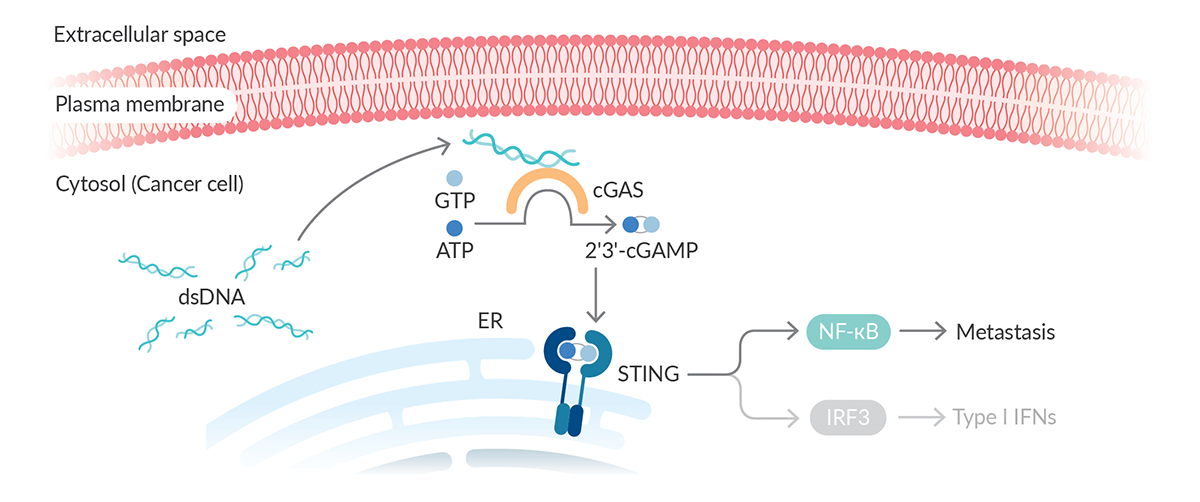
Figure 1. cGAS/STING signaling within chromosomally unstable cancer cells favors metastatic phenotypes.
Cancerous cells also export soluble 2'3'-cGAMP into the extracellular space, where it can be taken up by neighboring host cells to trigger canonical STING signaling and a robust immune response including type I IFN production, dendritic cell recruitment, and cytotoxic T cell activation (Figure 2).2,3,5 However, this signaling can be attenuated through the activity of ENPP1, which is upregulated in a variety of cancers, including ovarian, liver, breast, thyroid, and pancreatic cancers, and is associated with poor prognosis in several cancer types.2,5,6
ENPP1 is a transmembrane protein with an external-facing catalytic domain that degrades extracellular 2'3'-cGAMP to reduce paracrine STING signaling in the tumor microenvironment, providing cancerous cells with yet another mechanism to dampen the immune response.3,7 Because only 2'3'-cGAMP in the extracellular environment is degraded, cancerous cells can prevent immune activation mediated by extracellular 2'3'-cGAMP in the tumor microenvironment while still benefitting from pro-metastatic intracellular 2'3'-cGAMP signaling.3
Figure 2. ENPP1 degrades extracellular 2'3'-cGAMP to inhibit paracrine STING signaling (upper panel). In the absence of ENPP1 (lower panel), 2'3'-cGAMP is taken up by healthy host cells in the tumor microenvironment, leading to activation of canonical STING signaling and the production of tumor-suppressive immune responses.
ENPP1 Contributes to Adenosine Signaling
ENPP1 also assists in immune evasion through the production of adenosine. As previously mentioned, ENPP1 degrades 2'3'-cGAMP, hydrolyzing it to GMP and AMP.7 ENPP1 also hydrolyzes ATP (Figure 3). Hydrolysis of ATP, which is present in increased levels in the tumor microenvironment due to cell death and damage and exerts pro-inflammatory effects, produces AMP and inorganic pyrophosphate (PPi). AMP resulting from the hydrolysis of either 2'3'-cGAMP or ATP by ENPP1 can be further hydrolyzed by ecto-5'-nucleotidase (NT5E; CD73) to form adenosine, which can bind to extracellular adenosine receptors and inhibit production of pro-inflammatory cytokines, stimulate synthesis of anti-inflammatory cytokines, promote cancer cell migration, and enhance tumor progression.2,7 By degrading ATP and 2'3'-cGAMP, ENPP1 not only suppresses their pro-inflammatory effects, but also leads to production of adenosine, which has immunosuppressive activities. This makes ENPP1 an appealing target in the development of new anticancer therapeutics, as ENPP1 inhibition would lead to extracellular accumulation of pro-inflammatory 2'3'-cGAMP and limit adenosine production, thereby allowing for induction of anticancer immune responses.
Figure 3. AMP produced from ENPP1-mediated hydrolysis of 2’3’-cGAMP or ATP is further degraded to adenosine, which suppresses immune responses in the tumor microenvironment.
Targeting ENPP1 in Cancer
Recent genetic and pharmacological studies in cellular and animal models of cancer have demonstrated the potential of ENPP1 as a target for new anticancer therapeutics. In cellular models, chemical inhibition of ENPP1 activated STING signaling and type I IFN production.8,9 In animal models of cancer, loss of ENPP1 in cancerous cells led to reduced lung metastasis, increased infiltration of immune cells, and longer overall survival and use of ENPP1 inhibitors induced tumor T cell infiltration and reduced tumor growth.2,5,8,10
A variety of nucleotide and non-nucleotide ENPP1 inhibitors can be used to study ENPP1 function in both physiological and pathological conditions. POM 1 and PSB-069 are inorganic cluster metal complexes known as polyoxometalates that inhibit ENPP1 activity in a substrate-independent manner.4 Other inhibitors are more substrate-specific, however; ENPP1 Inhibitor C is 35-fold more effective at inhibiting ENPP1 when 2'3'-cGAMP is used as the substrate compared with ATP, while suramin inhibits ENPP1 more effectively with ATP as the substrate.
Cayman offers a variety of tools and services to facilitate research into ENPP1 function, cGAS/STING signaling, adenosine signaling, and development of novel ENPP1 inhibitors.
ENPP1 Fluorescent Inhibitor Screening Assay Kit

Features
Screen for inhibitors of human ENPP1
Includes recombinant human ENPP1 and positive control ENPP1 inhibitor C Assay Reagent
Assay 45 samples in duplicate or 29 samples in triplicate
Plate-based fluorometric measurement (Ex/Em = 485/520 nm)
2'3'-cGAMP ELISA Kit
Features
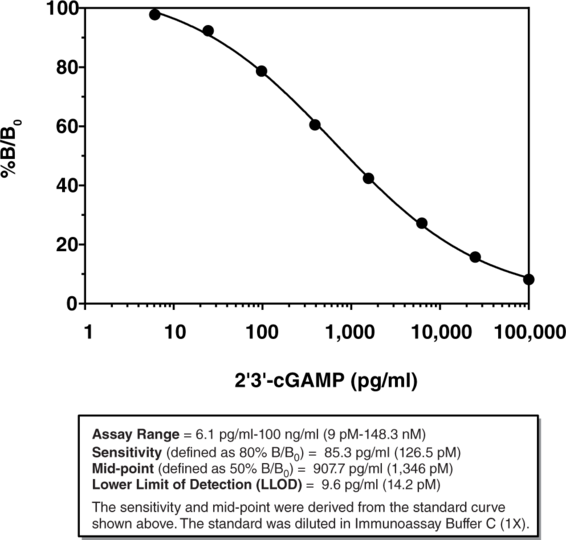
Measure 2'3'-cGAMP in cell lysates, plasma, serum, and tissue samples
Monitor the kinetics of 2'3'-cGAMP formation and hydrolysis in a biological setting
Assay 24 samples in triplicate or 36 samples in duplicate
LLOD = 9.6 pg/ml (0.01 pmol/ml)
Run overnight or incubate for just 2 hours without compromising sensitivity
ATP Detection Assay Kit - Luminescence
ENPP1 Protein and Inhibitors
ENPP1 (human, recombinant)
3,3'-((2-Chlorophenyl)methylene)bis(4-hydroxy-2H-chromen-2-one)
CAY10761
ENPP1-IN-1
ENPP1 Inhibitor C
POM 1
Suramin
CD73 Inhibitors
Adenosine 5'-diphosphate (potassium salt hydrate)
Adenosine 5'-methylenediphosphate (hydrate)
CD73-IN-1
PSB-12379
You May Also Be Interested In
| |
References
1. Roberts, F., Zhu, D., Farquharson, C., et al. ENPP1 in the regulation of mineralization and beyond. Trends Biochem. Sci. 44(7), 616-628 (2019).
2. Li, J., Duran, M.A., Dhanota, N., et al. Metastasis and immune evasion from extracellular cGAMP hydrolysis. Cancer Discov. 11(5), 1212-1227 (2021).
3. Carozza, J.A., Brown, J.A., Böhnert, V., et al. Structure-aided development of small-molecule inhibitors of ENPP1, the extracellular phosphodiesterase of the immunotransmitter cGAMP. Cell Chem. Biol. 27(11), 1347-1358 (2020).
4. Kumar, M. and Lowery, R.G. Development of a high-throughput assay to identify inhibitors of ENPP1. SLAS Discov. 26(5), 740-746 (2021).
5. Carozza, J.A., Böhnert, V., Nguyen, K.C., et al. Extracellular cGAMP is a cancer-cell-produced immunotransmitter involved in radiation-induced anticancer immunity. Nat. Cancer1(2), 184-196 (2020).
6. Wang, H., Ye, F., Zhou, C., et al. High expression of ENPP1 in high-grade serous ovarian carcinoma predicts poor prognosis and as a molecular therapy target. PLoS One 16(2), e0245733 (2021).
7. Onyedibe, K.I., Wang, M., and Sintim, H.O. ENPP1, an old enzyme with new functions, and small molecule inhibitors – a STING in the tale of ENPP1. Molecules 24(22), 4192 (2019).
8. Weston, A., Thode, T., Munoz, R., et al. Abstract 3077: Preclinical studies of SR-8314, a highly selective ENPP1 inhibitor and an activator of STING pathway. Cancer Res. 79(13 Suppl), 3077 (2019).
9. Weston, A.S., Thode, T.G., del Villar, R.R., et al. Abstract LB-118: SR8541A is a potent inhibitor of ENPP1 and exhibits dendritic cell mediated antitumor activity. Cancer Res. 80(16 Suppl), LB-118 (2020).
10. Baird, J., Dietsch, G., Florio, V., et al. MV-626, a potent and selective inhibitor of ENPP1 enhances STING activation and augments T-cell mediated anti-tumor activity in vivo. Society for Immunotherapy of Cancer 2018 Annual Meeting Posters. 7 (2018).
Contact Info
Cayman Chemical1180 East Ellsworth RoadAnn Arbor, Michigan 48108 USAToll Free: (800) 364-9897(USA and Canada only)Fax: (734) 971-3640


