
Cannabinoid Research Tools
Helping Make Your Cannabinoid Research Possible
Cayman’s broad collection of assay kits, antibodies, enzymes, and ligands has been designed to study cannabinoid receptor signaling, the enzymes involved in endocannabinoid synthesis and degradation, the transporters that enable cellular uptake/release, and the activity of many metabotropic, nuclear, and ionotropic receptors that also recognize cannabinoids as ligands.
Featured Products for Cannabinoid Research
- Host: Rabbit
- Application: IF, IHC, WB
- Species Reactivity: (+) Human, (+) Mouse, (+) Rat
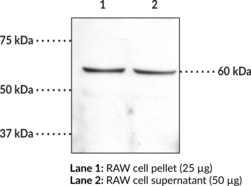
- Host: Rabbit
- Application: IHC and WB
- Species Reactivity: (+) Human, (+) Mouse
Cannabinoid Receptor Ligands
Endocannabinoids – produced in the body
Phytocannabinoids – found in Cannabis
EXPLORE OUR CANNABIS & HEMP ANALYTICAL STANDARDS
VIEW THE RESOURCE PAGESynthetic Cannabinoids – chemically engineered
VIEW ALL CB1 & CB2 RECEPTOR MODULATORS
LOOKING TO SCREEN A PANEL OF SYNTHETIC CANNABINOIDS?
Discover our screening library with more than 350 synthetic cannabinoids
Learn More
Metabolic Enzymes & Transporters
Endogenous cannabinoids are synthesized in postsynaptic terminals upon neuronal activation. 2-AG is synthesized from DAG by DAGLα. AEA is synthesized from NAPE by NAPE-PLD. These lipids travel retrogradely to activate cannabinoid receptors on presynaptic terminals or astrocytes. 2-AG is degraded by MAGL and AEA is degraded by FAAH.
Cannabinoid Synthesis
Cannabinoid Degradation
- Fatty Acid Amide Hydrolase (human, recombinant)
- Fatty Acid Amide Hydrolase Polyclonal Antibody
- Fatty Acid Amide Hydrolase Inhibitor Screening Assay Kit
- Monoacyl
glycerol Lipase (human, recombinant) - Monoacyl
glycerol Lipase Polyclonal Antibody - Monoacyl
glycerol Lipase Inhibitor Screening Assay Kit - Arachidonoyl-
1- thio- Glycerol - COX-
2 (human, recombinant)
VIEW ALL FAAH INHIBITORS
VIEW ALL MAGL INHIBITORS
Cannabinoid Intracellular Transport
Classical & Related Cannabinoid Receptors
Receptors of the endocannabinoid system include the classic CB1 and CB2 GPCRs as well as the orphan GPCRs GPR55, GPR18, and GPR119, several members of the transient receptor potential (TRP) ion channel superfamily, and the peroxisome proliferator-activated receptors (PPARs).
Articles & Literature Related to Cannabinoids
Request Your Poster
CANNABINOID RECEPTORS
A guide to what is currently known about cannabinoid receptor signaling
- CB1- and CB2-Selective Ligands
- Mixed CB1/CB2-Selective Ligands
- Receptor Distribution and Mechanism of Action
- Amino Acid Sequence of Cannabinoid Receptors
View All Cannabinoid Wall Posters
Active compounds found in plants of the Cannabis genus as well as endogenous analogs of these substances, and a myriad of synthetic analogs can influence a wide range of biological processes by engaging G protein-coupled receptors (GPCRs) of the endocannabinoid system.
Read MoreAlkyl side chain length directly correlates with receptor binding affinity at human cannabinoid receptors. Novel four-carbon and seven-carbon homologs of cannabidiol (CBD) and Δ9-THC are reported to have binding activity more potent than that of Δ9-THC.
Read MoreThe development of addiction-free medications effective for treating severe pain is a major aim for combating the misuse of prescription opioids. In a continued effort to create safe and more effective opioid alternatives, several novel strategies are being employed.
Read MoreAlthough today we still know very little about Cannabis, its powers come from the ability of the chemical constituents to activate and affect the endocannabinoid system (ECS), a homeostatic regulatory system ubiquitous to every living creature on the planet.
Read MoreA novel lipid naming convention has recently been proposed by Dr. Heather Bradshaw, Associate Professor of Neuroscience at Indiana University Bloomington and the current president of The International Cannabinoid Research Society. Dr. Bradshaw has proposed the term lipoamine to encompass the family of lipids formed by the conjugation of fatty acids to any simple amine such as ethanolamine, monoamine neurotransmitters such as dopamine, taurine, serotonin, and GABA and all amino acids.
Read MoreAs the cannabis industry is now a multibillion-dollar global market and will only continue to grow as more
Read MoreCayman Services
Endocannabinoid Profiling Services
Cayman's scientific staff has decades of industry expertise in assay and methods development, sample preparation, and analysis. Our customizable 49-plex endocannabinoid panel will help you identify acyl amines, acylglycerols, acyl serines, and others in your samples. We provide expert consultation on sample handling and use optimized sample extraction protocols to deliver accurate results you can trust.
Contact Info
Cayman Chemical1180 East Ellsworth RoadAnn Arbor, Michigan 48108 USAToll Free: (800) 364-9897(USA and Canada only)Fax: (734) 971-3640


