
News & Announcements
Crosstalk in the Arachidonic Acid Cascade
Article from 2022-06-23
Arachidonic acid (AA) undergoes enzymatic and non-enzymatic oxidation to produce an array of lipid metabolites collectively known as eicosanoids. Many eicosanoids have central and diverse roles in tissue homeostasis, inflammation, platelet function, and smooth muscle contraction. Understanding the biological role of eicosanoids and finding ways to modify their formation and function has been the focus of intensive research for decades. Throughout these investigations, it has become clear that the AA cascade is a highly intertwined network of enzymes and metabolites with extensive crosstalk.
Click the links below to explore each section:
Download or request a physical copy of our arachidonic acid cascade wall poster
The Arachidonic Acid Cascade
Arachidonic acid (AA) is a 20-carbon ω-6 polyunsaturated fatty acid (PUFA) that is abundant in biological cell membranes where it is esterified into membrane phospholipids. Cytosolic phospholipase A2 (PLA2), a ubiquitous enzyme that is activated in response to various inflammatory stimuli, liberates AA and releases it into the cellular milieu, where AA can be shunted into three main enzymatic pathways: cyclooxygenase (COX), lipoxygenase (LO), and cytochrome P450 (CYP450) pathways. When investigating these pathways, it is important to consider: 1) activation of these pathways can either be beneficial or maladaptive, 2) these pathways do not occur in isolation, 3) there is a substantial amount of crosstalk, cooperation, and competition in the AA cascade, and 4) the net effect of any lipid metabolite depends on the amount produced, the presence or absence of other lipid metabolites, and its further conversion to inactive compounds.
Cyclooxygenase Pathway
Cyclooxygenase (COX) catalyzes the initial step that commits AA to the production of prostaglandins (PGs) and thromboxane A2 (TXA2), which are collectively known as prostanoids. There are two COX isoforms: COX-1 and COX-2. COX-1 is constitutively expressed in nearly all cells and tissues where it produces PGs that have homeostatic roles like inhibition of platelet aggregation and maintenance of cardiovascular, renal, and gastrointestinal systems. In contrast, COX-2 is inducible and transiently expressed in response to cytokine stimulation, LPS, and various growth factors, as well as tumor promoting agents. These PGs mediate inflammation by promoting inflammatory cell recruitment, amplifying cytokine signaling, and increasing vascular permeability, among other effects. Taken together, the presence of constitutive and inducible forms of COX represents a tailorable mechanism to harness a common set of lipid mediators for both homeostatic and inflammatory functions.
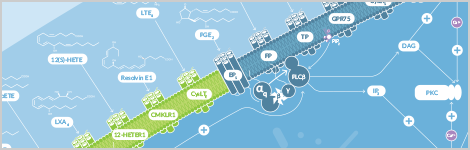
COX is a bifunctional enzyme, first generating the unstable intermediate PGG2via its COX activity followed by the conversion of PGG2 to PGH2 by its peroxidase function. PGH2 is the common precursor for PGs and TXs. PGH2 can be isomerized into TXA2, a vasoconstrictor with prothrombotic properties, or PGs like PGD2, PGE2, PGF2α, or PGI2, by their respective synthases. In some cases, more than one PG synthase is available, leading to the simultaneous formation of multiple PGs at a single site. The plethora of effects mediated by PGs and TXA2 is mediated by the diversity of their G protein-coupled receptors (GPCRs): two PGD receptor subtypes (DP1 and DP2, also known as CRTH2), four PGE receptor subtypes (EP1-EP4), the PGF receptor (FP), the PGI receptor (IP), and the TXA2 receptor (TP). Prostanoid synthesis and their receptors are summarized in Figure 1. See our article on Eicosanoid Enzymology and Metabolism for a closer look at the formation of PGs and their receptors.
Figure 1. COX catalyzes the synthesis of various PGs and TXA2. The biological activities of PGs and TXA2 are mediated by their respective receptors.
Agents that target the COX pathway are of interest for the treatment of inflammatory conditions and as anti-platelet therapeutics. COX inhibitors like aspirin and indomethacin are non-steroidal anti-inflammatory drugs (NSAIDs) that reduce PG production to decrease the cardinal signs of inflammation (redness, swelling, pain, and fever). In platelets, inhibition of COX-1 impairs TXA2 synthesis, reducing platelet aggregation. PG analogs and receptor agonists have also found clinical use. The PG analogs latanoprost, bimatoprost, and travoprost are used for the treatment of glaucoma. Novel applications for COX pathway inhibitors are continuing to be discovered. For example, Cayman Chemical is exploring the use of our selective EP4 receptor agonist KMN-159 for dental implant osseointegration.
COX Pathway Research ToolsFind small molecule inhibitors, isotope-labeled lipids, proteins, antibodies, and assay kits to study the COX pathway. |
Lipoxygenase Pathway
The lipoxygenase (LO) pathway produces leukotrienes (LTs), hydroxyeicosatetraenoic acids (HETEs), lipoxins (LXs), hepoxilins (HXs), and eoxins, leading to a myriad of biological effects including the promotion and resolution of inflammation, bronchoconstriction, platelet function, and tumorigenesis. Mammalian LOs catalyze the oxygenation of AA at the 5-, 12-, or 15-position to hydroperoxyeicosatetraenoic acid (HpETE) intermediates, which are reduced to HETEs by ubiquitous peroxidases or enzymatically converted to other bioactive lipid metabolites. LOs are widely expressed, especially in immune, epithelial, and tumor cells, as well as platelets.
5-LO, in concert with 5-LO activating protein (FLAP), catalyzes the formation of 5(S)-HpETE, which leads to 5(S)-HETE, a neutrophil chemoattractant, and leukotrienes (LTs). 5(S)-HpETE is converted to leukotriene A4 (LTA4) by the further action of 5-LO. LTA4 is then converted to LTB4 by LTA4 hydrolase, which is ubiquitously expressed, or to the cysteinyl LTs. Cysteinyl LTs are a class of LTs produced when LTC4 synthase, which is expressed primarily by innate immune cells, forms LTC4 from LTA4. LTC4 is then converted sequentially to LTD4 and LTE4 by extracellular peptidases. LTs exert their biological activity through G protein-coupled receptors (Figure 2). LTB4 has two receptors: BLT1 and BLT2, which mediate cell trafficking. BLT1 has high affinity for LTB4 and is expressed in leukocytes and platelets, whereas the low-affinity receptor BLT2 is more ubiquitously expressed and has a wider range of ligand specificity. CysLTs also have two receptors: CysLT1 and CysLT2, which are co-expressed in most myeloid cells and notably, mediate bronchoconstriction and airway hyperresponsiveness. Zileuton (a reversible 5-LO inhibitor) as well as montelukast, pranlukast, and zafirlukast (CysLT receptor antagonists) are used clinically to treat asthma and allergic rhinitis.
Figure 2. 5-LO catalyzes the synthesis of 5(S)-HETE, LTB4, and CysLTs. LTs exert their biological activity through BLT and CysLT receptors.
12-LO is tightly regulated by transcription and its cellular distribution and reaction specificity is variable by species (Table 1). For simplicity, 12-LO herein refers to any LO with 12(S)-LO activity, including LOs encoded by human ALOX12 and ALOX15. We refer the reader to Kuhn et al. 2015 for an excellent review on species-specific variation in the cellular expression and product formation of these enzymes.
Table 1. Reaction specificity of enzymes with 12-LO activity in human and mouse.
| Protein name | 12-LO | 12R-LO | 15-LO-1 |
| Human | |||
| Gene | ALOX12 | ALOX12B | ALOX15 |
| Other names | Platelet-type 12-LO | Epidermis-type 12-LO | Leukocyte-type 12-LO; 12/15-LO |
| Products | 12(S)-HpETE | 12(R)-HpETE | 15(S)-HpETE > 12(S)-HpETE |
| Mouse | |||
| Gene | Alox12 | Alox12b | Alox15 |
| Other names | Platelet-type 12-LO; 12/15-LO | Epidermis-type 12-LO | Leukocyte-type 12-LO; 12/15-LO |
| Products | 12(S)-HpETE | 12(R)-HpETE | 12(S)-HpETE >15(S)-HpETE |
12(S)-HETE is produced from 12(S)-HpETE in large amounts by activated platelets in response to agents like ADP, TXA2, thrombin, and collagen where it has roles in platelet aggregation and thrombus formation. It is also produced by leukocytes and acts as a chemoattractant, and in tumor cells, it is associated with cancer cell survival and tumorigenesis. GPR31, also known as the 12(S)-HETE receptor (12-HETER), is expressed mainly in platelets and is the primary receptor for 12(S)-HETE. However, 12(S)-HETE can also bind to TP and BLT2. In the case of TP receptors, 12(S)-HETE induces vasodilation in arteries precontracted with carbocyclic TXA2, a stable analog of TXA2, thus acting as a competitive antagonist. Regarding BLT2, 12(S)-HETE can act as a competitive antagonist or weak agonist. For example, 12(S)-HETE inhibits the binding of LTB4 to BLT2 in radioligand assays, and it also induces calcium mobilization in and chemotaxis of cells expressing BLT2, albeit with reduced potency compared to LTB4.
Isomerization of 12(S)-HpETE by HxA3 synthase forms hepoxilin A3, the founding member of the hepoxilin family. In general, hepoxilins promote inflammation and have been implicated in neutrophil transmigration across epithelial cells, stimulation of insulin secretion, and vascular relaxation. HxA3 is further metabolized to its trioxilin 8,11,12-TriHETrE by epoxide hydrolase, a conversion that is coincident with loss of biological activity.
Figure 3. 12-LO catalyzes the formation of 12(S)-HETE and HxA3. GPR31 has been identified as the primary receptor for 12(S)-HETE, though 12(S)-HETE can also bind BLT2 and TP receptors. The weight of the arrow indicates the primary receptor.
There are two types of 15-LO in humans, 15-LO-1 (ALOX15) and 15-LO-2 (ALOX15B), both of which oxygenate AA to produce 15(S)-HpETE, the precursor for 15(S)-HETE, an angiogenic molecule that is a target for cancer treatments, eoxins, and lipoxins. 15-LO isozymes vary in their expression and reaction specificity. 15-LO-1 is mainly expressed in airway epithelial cells, eosinophils, and reticulocytes, whereas 15-LO-2 is expressed in the lung, prostate, skin, and cornea. Human 15-LO-1 produces 15(S)-HETE and, to a minor extent, 12(S)-HETE. In contrast, 15-LO-2 exclusively produces 15(S)-HETE (Figure 4). To further complicate matters, the enzyme encoded by Alox15, the murine ortholog of ALOX15, actually favors production of 12(S)-HETE over 15(S)-HETE. This discrepancy confounds the interpretation of mouse studies to human relevance.
Figure 4. The two forms of 15-LO in humans have varying reaction specificity. The weight of the arrow indicates the primary product formed.
In eosinophils, further oxygenation of 15(S)-HpETE by 15-LOX-1 produces an alternative class of 14,15-LTs known as eoxins (Figure 5). The synthesis of the eoxins 14,15-LTC4, 14,15-LTD4, and 14,15-LTE4 occurs in a manner identical to the formation of conventional 5-LO-produced LTs. In many instances, eoxins share similar functions with their LT counterparts. Eoxins are generally regarded as pro-inflammatory and contribute to asthma by inducing endothelial cell dysfunction and increasing vascular permeability.
Figure 5. 15-LOX-1 catalyzes the formation of 14,15-LTC4, 14,15-LTD4, and 14,15-LTE4. These members form a class of LTs known as eoxins in eosinophils.
Other metabolites are formed by the cooperative actions of multiple LOs. Lipoxins are a class of anti-inflammatory eicosanoid that are synthesized by at least three ways (Figure 6). In one route, 15-LO-generated 15(S)-HpETE is acted on by 5-LO to produce an epoxy intermediate, which is then converted by lipoxin hydrolases to lipoxin A4 (LXA4) and lipoxin B4 (LXB4). Another route uses LTA4, the LT precursor, generated from 5-LO. LTA4 is either converted by 12- or 15-LO to an epoxy intermediate that is converted to LTA4 and LTB4. This reaction can occur in cells that express both enzymes or via a transcellular mechanism. For example, platelets do not express 5-LO, but neutrophils do. Neutrophils produce LTA4, which is transferred to platelets, which express 12-LO and can synthesize lipoxins. This eloquent mechanism represents a means by which cells that do not express the full repertoire of LO enzymes can utilize lipid metabolites for pro-inflammatory or anti-inflammatory functions. A third mechanism of synthesis produces the lipoxin epimers 15(R)-lipoxin A4 and 15(R)-lipoxin B4, which are also known as aspirin-triggered lipoxins. Aspirin acetylates COX-2, diverting COX-2 away from the production of prostaglandins and thromboxanes and redirecting it towards the production of 15(R)-HETE, a precursor for the formation of the aspirin-triggered LXs 15(R)-LXA4 and 15(R)-LXB4, which have a variety of anti-inflammatory and pro-resolving activities. LXs and aspirin-triggered LXs mediate their effects through formyl peptide receptor 2 (FPR2), a GPCR widely expressed in leukocytes as well as intestinal and airway epithelial cells.
Figure 6. Lipoxins can be formed by at least three mechanisms. The first two mechanisms proceed via the dual lipoxygenation of HpETE intermediates whereas the last mechanism occurs by aspirin-mediated acetylation of COX.
View full-size image (opens in new tab)
LO Pathway Research ToolsFind small molecule inhibitors, isotope-labeled lipids, proteins, antibodies, and assay kits to study the LO pathway. |
Cytochrome P450 Pathway
The cytochrome P450 (CYP450) pathway is the third branch of the AA cascade and mainly produces epoxyeicosatrienoic acids (EETs) and HETEs (Figure 7). CYPs compromise a large family of membrane-bound enzymes that are expressed in the liver, brain, kidney, and lung as well as the cardiovascular system. CYPs with hydroxylase activity like CYP4A and CYP4F form 20-HETE and to a lesser extent 19-HETE, which have opposing effects on vasodilation. CYPs with epoxygenase activity like CYP2C and CYP2J catalyze the production of the four EET regioisomers 5(6)-, 8(9)-, 11(12)-, and 14(15)-EET, which are generally regarded as having anti-inflammatory and cardioprotective properties. These EETs are converted to their corresponding dihydroxyeicosatrienoic acids (DiHETs) 5(6)-, 8(9)-, 11(12)-, and 14(15)-DiHET by epoxide hydrolases, which significantly reduces their biological activity. Hence, increasing tissue accumulation of EETs by using epoxide hydrolase inhibitors is an attractive option for the treatment of various inflammatory conditions.
Figure 7. CYP450s catalyze the formation of EETs and HETE from AA.
CYP450 Pathway Research ToolsFind small molecule inhibitors, isotope-labeled lipids, proteins, antibodies, and assay kits to study the CYP450 pathway. |
Products of Non-Enzymatic Reactions
Non-enzymatically derived products of AA include isoprostanes and racemic forms of HpETEs and HETEs. The non-enzymatic peroxidation of AA produces a group of PG-like metabolites known as isoprostanes as well as racemic versions of HpETEs and their corresponding HETEs. A variety of isoprostane, HpETE, and HETE regio- and stereoisomers can be formed, depending on the position of oxygen insertion. As these compounds are formed by reactive oxygen species, they are generally regarded as pro-inflammatory lipid metabolites. Indeed, isoprostanes, especially 8-iso-PGF2α, have been used as markers of oxidative stress and tissue injury.
HpETEs and their corresponding HETEs exist as racemic mixtures of R- and S-enantiomers (i.e., (±)5-, (±)8-, (±)9-, (±)11-, (±)12-, and (±)15-HETE). In general, the bioactivity of racemic HETEs is attributed to the S-enantiomer. An in-depth discussion on the mechanism of isoprostane and non-enzymatic HETE formation can be found here.
Downstream metabolites of AA can also undergo non-enzymatic reactions. PGE2 and PGD2 can undergo non-enzymatic dehydration to the cyclopentenone PGs PGA2 and PGJ2, respectively. PGA2 is sequentially modified non-enzymatically to form PGC2 and PGB2. Similarly, PGJ2 undergoes sequential non-enzymatic conversion into ∆12-PGJ2 and 15-deoxy-∆12,14-PGJ2. 15-deoxy-∆12,14-PGJ2 is a potent PPARγ agonist that promotes a number of physiological effects, including anti-inflammatory and neuroprotective responses.
Interplay Between the AA Cascade & Endocannabinoids
Endocannabinoids are endogenous lipids derived from AA that function in anti-inflammatory, neuroprotective, cardioprotective, and metabolic responses. Their effects are mediated mainly through the cannabinoid receptors CB1 and CB2. Arachidonoyl ethanolamine (AEA, also known as anandamide) and 2-arachidonoyl glycerol (2-AG) are the most well-known endocannabinoids. AEA and 2-AG can act as substrates for COX-2, producing a range of products mirroring those formed by COX-2-mediated metabolism of AA. The oxygenation of AEA and 2-AG by COX-2 produces prostaglandin ethanolamides (PG-EAs), also known as prostamides, and prostaglandin glyceryl esters (PG-Gs), respectively. Some oxygenated endocannabinoids like PGE2-EA and PGD2-G have anti-inflammatory activities, whereas others like PGF2α-EA and PGE2-G are regarded as being pro-inflammatory. In addition to COX-2, AEA and 2-AG can also be metabolized by CYP450s (specifically CYP3A4 and CYP2C19) as well as 12- and 15-LO to ethanolamide and glyceryl ester forms of EETs and HETEs (Figure 8).
The biological activities of AEA and 2-AG are terminated by fatty acid amide hydrolase (FAAH) and monoacylglycerol lipase (MAGL), respectively. FAAH and MAGL degrade AEA and 2-AG, liberating the AA component of these endocannabinoids in the process, making it freely available as substrate for COX-, LO-, or CYP450-mediated metabolism, marking yet another way that endocannabinoids and the AA cascade converge.
Figure 8. Metabolism of endocannabinoids by branches of the AA cascade produce ethanolamide (EA) and glycerol (G) ester forms of PGs, EETs, and HETEs. Catabolism of AEA and 2-AG leads to the release of AA, which acts as a substrate for the COX, LO, or CYP450.
Endocannabinoid Pathway Research ToolsFind small molecule inhibitors, isotope-labeled endocannabinoids, proteins, antibodies, and assay kits to study the endocannabinoid pathway. |
Upsetting Balance in the AA Cascade
Given the diversity of eicosanoids in several pathologies, small molecule inhibitors targeting COX, LO, and CYP450 pathways have been the focus of many investigations. Because of the significant crosstalk within the AA cascade, it is conceivable that altering one pathway invariably alters the other branches. Inhibition of one branch may shunt AA to a different branch, leading to the production of a different set of lipid metabolites that may oppose the action of those metabolites inhibited, leading to disappointing results. Indeed, unintended consequences can occur from upsetting balance in the AA cascade. Non-selective COX inhibitors inhibit both COX-1 and COX-2. Owing to the homeostatic role of COX-1 in the maintenance of gut epithelial integrity, non-selective COX inhibitors are associated with gastrointestinal side effects. To circumvent this off-target effect, selective COX-2 inhibitors, known as coxibs, were pursued as a means to target inflammatory PGs while sparing homeostatic PGs. Rofecoxib and valdecoxib were two COX-2 inhibitors that were approved - and then withdrawn - from U.S. markets because they were associated with an increased risk of adverse cardiovascular events. Under homeostatic conditions, COX-2 is induced by shear stress in blood vessels and is a key producer of PGI2, an inhibitor of platelet aggregation and a vasodilator. Rofecoxib and valdecoxib inhibit COX-2-induced PGI2 but spare COX-1-mediated TXA2 formation, tipping the balance in the AA cascade toward TXA2-mediated effects like vasoconstriction and thrombosis (Figure 9). Despite these contraindications, coxibs are a valuable therapeutic tool. Celecoxib is an FDA-approved COX-2 inhibitor approved for use in the treatment of pain and arthritis.
Figure 9. Inhibition of COX-2 shifts balance in the arachidonic acid cascade towards COX-1 mediated production of TXA2, resulting in pro-thrombotic effects.
Next Steps Towards Therapeutics
Given the critical roles that eicosanoids play in various pathologies, studies that investigate the biological activity of eicosanoids and identify small molecule inhibitors targeting the AA cascade have been the focus of intensive research for decades. Advances in mass spectrometry-based lipidomics approaches are unraveling the complexity of the eicosanoid network in various pathologies. Because of the increasing appreciation for the interplay between branches in the AA cascade, many pharmaceutical efforts are moving away from a "one target" approach in favor of a dual inhibitor design to target multiple arms of the AA cascade.
Available from Cayman
Cayman offers an impressive collection of tools and services for researchers studying lipid metabolism. We offer more than 3,400 lipids spanning 21 lipid classes. This impressive product line includes esterified forms of fatty acids and their metabolites, a modification that improves lipid solubility and uptake. We also offer pre-made BSA-fatty acid complexes, a physiologically relevant way to modify AA metabolism in vitro.
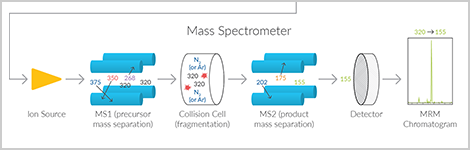
Our lipid experts have developed a series of dedicated tools for the detection and quantitation of lipids by ELISA, GC-MS, and LC-MS/MS. Our ELISAs offer a simple, sensitive, and cost-effective option for the quantification of a single lipid species. Mass spectrometry is the gold standard for the quantification of multiple lipid species simultaneously. We offer over 465 isotopically labeled standards and we have assembled over 100 pre-mixed panels of analytical standards for the quantitation of various lipids. These panels are easily customizable for your experiments - email us at contractresearch@caymanchem.com. We also offer our MaxSpec® standards, which simplify mass spectrometry workflows and ensure quantitative reproducibility. Each batch is held to rigorous standards for identity, purity, stability, and concentration.
Lipidomic Profiling Services
With Cayman Contract Services, your samples are in the hands of scientists skilled in the identification and quantification of lipids. Meet Miguel Gijón, one of our experts. Our facilities are equipped with state-of-the-art chromatography/mass spectrometry systems and data analysis software, enabling us to offer targeted and untargeted lipidomics services to meet your specific project needs.
Cayman offers both untargeted and targeted lipidomics services. Profile changes across all or a single lipid class, including fatty acyls, glycerolipids, glycerophospholipids, sphingolipids, and sterol lipids with our untargeted lipidomics approach. Maximize data from precious samples with one of our targeted lipid panels, which deliver the sensitivity, efficiency, and specificity needed to identify and quantify biologically relevant lipids. We offer targeted lipid panels for eicosanoids and oxylipins, phospholipids, sphingolipids, endocannabinoids, and many more.
Learn More About Cayman Lipidomics Services
You May Also Be Interested In
 | |
|
Suggested Reading
Alhouayek, M. and Muccioli, G.G. COX-2-derived endocannabinoid metabolites as novel inflammatory mediators. Trends Pharmacol. Sci. 35(6), 284-292 (2014).
Haeggström, J.Z. Leukotriene biosynthetic enzymes as therapeutic targets. J. Clin. Invest. 128(7), 2680-2690 (2018).
Kliewer, S.A., Lenhard, J.M., Willson, T.M., et al. A prostaglandin J2 metabolite binds peroxisome proliferator-activated receptor gamma and promotes adipocyte differentiation. Cell 83(5), 813-819 (1995).
Kuhn, H., Banthiya, S., and van Leyen, K. Mammalian lipoxygenases and their biological relevance. Biochim. Biophys. Acta 1851(4), 308-330 (2015).
Mashima, R. and Okuyama, T. The role of lipoxygenases in pathophysiology; new insights and future perspectives. Redox Biol. 6, 297-310 (2015).
Meirer, K., Steinhilber, D., and Proschak, E. Inhibitors of the arachidonic acid cascade: Interfering with multiple pathways. Basic Clin. Pharmacol. & Toxicol. 114(1), 83-91 (2014).
Napolitano, M. The role of the 12(S)-HETE/GPR31/12-HETER axis in cancer and ischemia-reperfusion injury. Biochem. Soc. Trans. 47(2), 743-754 (2019).
Parente, L. Pros and cons of selective inhibition of cyclooxygenase-2 versus dual lipoxygenase/cyclooxygenase inhibition: Is two better than one? J. Rheumatol. 28(11), 2375-2382 (2001).
Putman, A.K., Contreras, G.A., and Sordillo, L.M. Isoprostanes in veterinary medicine: Beyond a biomarker. Antioxidants(Basel) 10(2), 145 (2021).
Rouzer, C.A. and Marnett, L.J. Endocannabinoid oxygenation by cyclooxygenases, lipoxygenases, and cytochromes P450: Cross-talk between the eicosanoid and endocannabinoid signaling pathways. Chem. Rev. 111(10), 5899-5921 (2011).
Siangjong, L., Gauthier, K.M., Pfister, S.L., et al. Endothelial 12(S)-HETE vasorelaxation is mediated by thromboxane receptor inhibition in mouse mesenteric arteries. Am. J. Physiol. Heart Circ. Physiol. 304(3), H382-H392 (2013).
Singh, N.K. and Rao, G.N. Emerging role of 12/15-Lipoxygenase (ALOX15) in human pathologies. Prog. Lipid Res. 73, 28-45 (2019).
Wang, B., Wu, L., Chen, J., et al. Metabolism pathways of arachidonic acids: Mechanisms and potential therapeutic targets. Signal Transduct. Target. Ther. 6(1), 94 (2021).
Yokomizo, T., Kato, K., Hagiya, H., et al. Hydroxyeicosanoids bind to and activate the low affinity leukotriene B4 receptor, BLT2. J. Biol. Chem. 276(15), 12454-12459 (2001).
Contact Info
Cayman Chemical1180 East Ellsworth RoadAnn Arbor, Michigan 48108 USAToll Free: (800) 364-9897(USA and Canada only)Fax: (734) 971-3640


