
News & Announcements
STING Agonists Inhibit SARS-CoV-2 Infection
Article from 2021-07-12
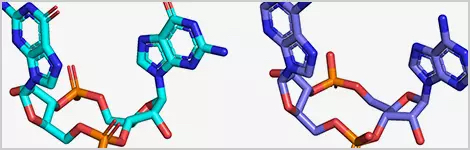
A new study in Science Immunology by Li et al. identified the cyclic dinucleotides (CDNs) 2’2’-cGAMP and 2’3’-cGAMP, endogenous STING agonists, as innate immune system activators that could inhibit SARS-CoV-2 infection. Indeed, STING activation elicited by SARS-CoV-2 induces a delayed type I and type III interferon (IFN) response and the expression of interferon-stimulated genes as well as inflammatory NF-κB signaling in neighboring respiratory epithelial cells that blocks infection. Because CDNs and IFNs make poor drug candidates themselves, more potent non-nucleotide STING agonists have been developed. These researchers demonstrate that the STING agonist diABZI STING agonist-1 was active against SARS-CoV-2 in primary human respiratory epithelial cells and in vivo in two different mouse models of infection, reducing lung inflammation. diABZI STING agonist-1 was also found to be effective against the SARS-CoV-2 South African variant B.1.351.
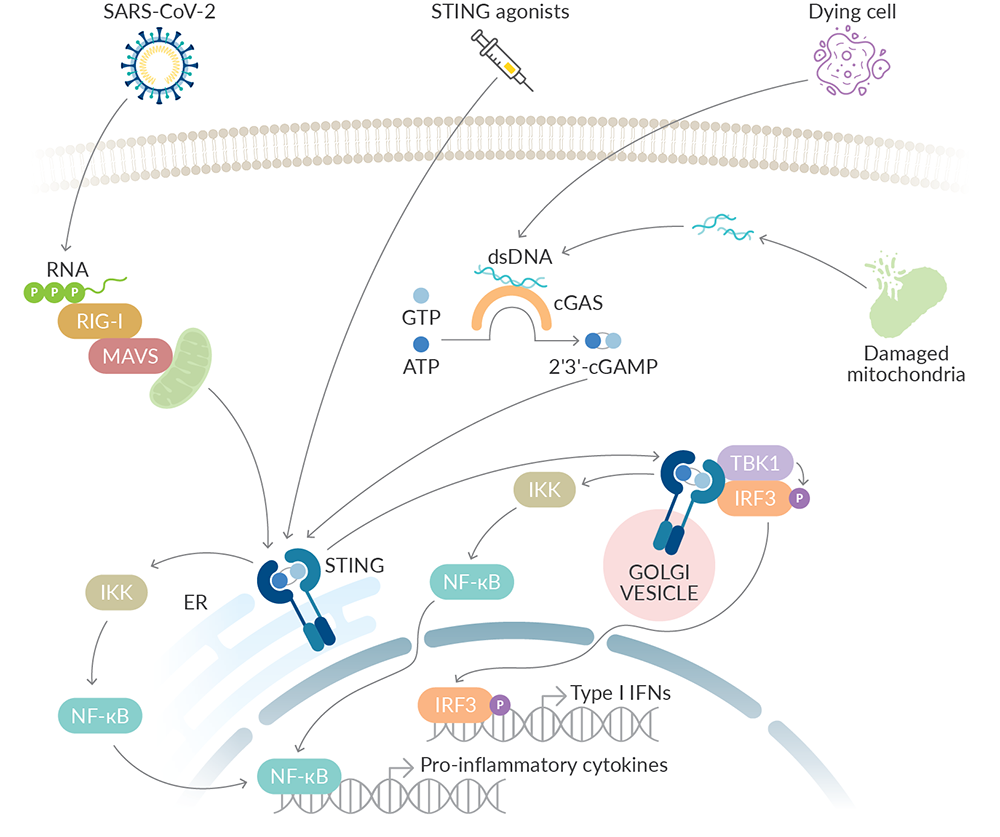
RNA viruses like SARS-CoV-2 are detected by nucleic acid sensors such as RIG-I as part of the innate immune response that activates stimulator of interferon genes (STING), leading to activation of the type I IFN pathway and inflammatory NF-κB signaling. Additionally, cyclic GMP-AMP (cGAMP) synthase (cGAS) is found in the cytosol of mammalian cells and acts as a DNA sensor, detecting DNA released from damaged cells and mitochondria. When bound to DNA, cGAS produces the cyclic dinucleotide second messenger 2'3'-cGAMP, which activates STING.
Similarly, a separate study in Science Immunology by Humphries et al. described diABZI STING agonist-2 as highly effective in limiting SARS-CoV-2 replication in lung epithelial cells and in mice expressing human ACE2, the receptor SARS-CoV-2 uses to gain entry into cells. These researchers show that intranasal delivery of diABZI STING agonist-2 induced a rapid, short-lived activation of STING, leading to transient proinflammatory cytokine production and lymphocyte activation in the lung associated with inhibition of viral replication. This conferred strong protection from severe respiratory disease.
Cayman's lead Structural Biology scientist has used in silico modeling and surface plasmon resonance (SPR) to screen and characterize the binding kinetics and affinity of several human STING agonists, including 2'3'-cGAMP and diABZI STING agonist-1 docked against several variants of the human STING protein. Cayman's study marks the first reported kinetics and affinity values for diABZI STING agonist-1 towards human STING. Based on these modeling results, diABZI STING agonist-1 was ranked as the most potent compound compared to all agonists studied. These findings help to provide guidelines for the design and development of future human STING agonists.
 | To see the full results from this study, watch the Selection and Characterization of hSTING-Agonists via In Silico Modeling and SPR virtual scientific poster. View the Virtual Poster |
Cayman offers a dedicated catalog of CDNs, small molecule STING agonists and antagonists, and purified human STING variants to study human STING binding interactions.
Purified nucleic acid sensors RIG-I and cGAS and related antibodies, assay kits, and small molecule inhibitors are also available. Download the STING Signaling Pathway brochure to learn more.
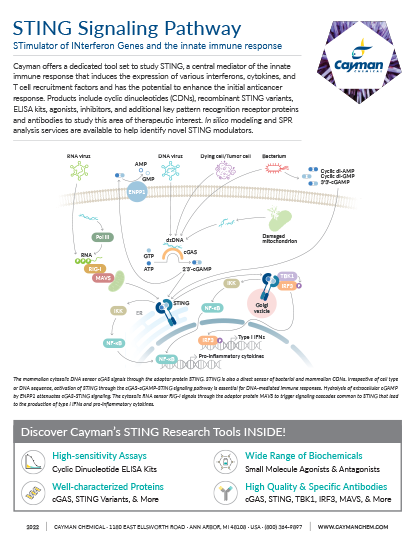
In silico modeling and SPR analysis services are available to help identify novel STING modulators. Our Structure-Based Drug Design services are supported by medicinal chemistry, computer-aided drug design, and protein production services. Our structural biology experts, with proven experience in biophysical characterization, X-ray structure determination, and in silico docking analysis, have determined more than 250 high-resolution crystal structures of a variety of targets, advancing drug discovery and development efforts for our clients. Contact us for help with your next discovery.
References
Humphries, F., Shmuel-Galia, L., Jiang, Z., et al. A diamidobenzimidazole STING agonist protects against SARS-CoV-2 infection. Sci. Immunol. 6(59), eabi9002 (2021).
Li, M., Ferretti, M., Ying, B., et al. Pharmacological activation of STING blocks SARS-CoV-2 infection. Sci. Immunol. 6(59), eabi9007 (2021).
You May Also Be Interested In
| |
|
Contact Info
Cayman Chemical1180 East Ellsworth RoadAnn Arbor, Michigan 48108 USAToll Free: (800) 364-9897(USA and Canada only)Fax: (734) 971-3640


